
1909–1958 US Mint Wheat Penny Shotgun Roll with Indian Head Cent Ender: Honest Review for Coin Collectors
Product Summary
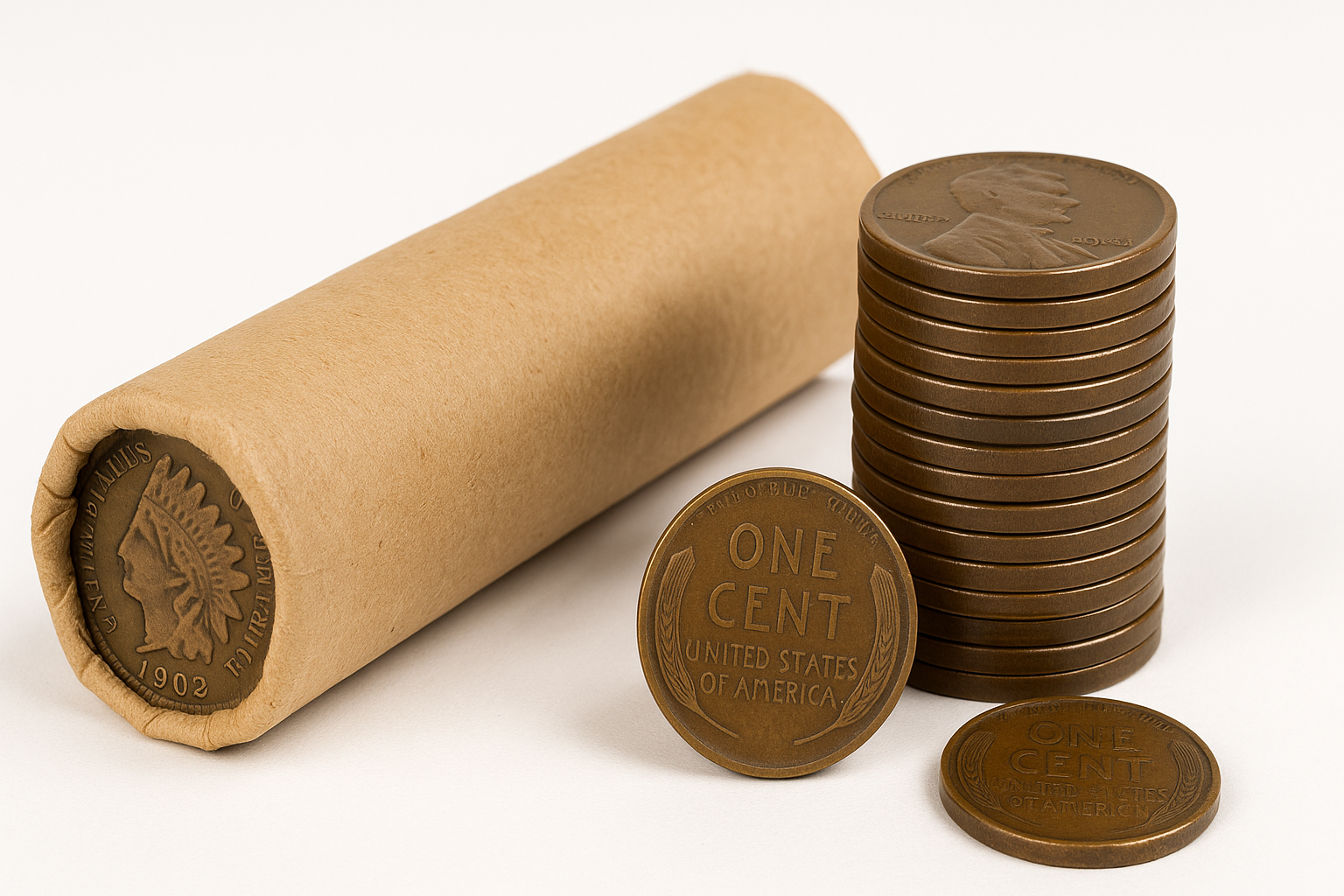
The 1909–1958 US Mint Wheat Penny Shot Gun Roll w/Indian Head Cent End Penny Seller Good or Better is a pre‑assembled roll of 50 US one‑cent coins. The listing describes a shotgun‑style paper roll containing mostly Lincoln wheat cents dated between 1909 and 1958, with an Indian Head cent deliberately placed on one visible end (the "ender"). Coins are advertised as "Good or Better", which typically means heavily circulated but still fully identifiable coins with readable dates and major details.
The roll is marketed primarily as a collector’s mystery roll rather than a certified investment product. You are paying a premium over face value (around $19.99 at the time of writing) for:
- The guaranteed Indian Head cent on the end
- A full roll of older wheat cents spanning the classic 1909–1958 era
- The entertainment value of searching the roll yourself for better dates, mintmarks, or conditions
There is no claim that the roll is factory original, third‑party graded, or guaranteed to contain rare key dates; it is essentially a curated, mixed‑condition roll aimed at hobbyist collectors.
Target Users
This product is best suited for:
- Beginner coin collectors who want an easy way to get a batch of older US pennies without researching individual dates and mintmarks.
- Casual hobbyists and coin‑roll hunters who enjoy the thrill of searching through a mystery roll, even if most coins are common.
- Gift buyers looking for an interesting, historically themed present for someone interested in coins, American history, or collecting.
- Parents and educators who want hands‑on material for teaching students about early 20th‑century US coinage.
It is less ideal for:
- Serious, value‑focused numismatists who mainly want certified key dates, slabbed coins, or carefully curated sets.
- Investors looking for predictable financial returns or guaranteed high‑grade pieces.
Main Benefits
-
Immediate access to classic wheat cents (1909–1958)
Instead of hunting for individual coins, you receive a ready‑to‑search full roll that should include a variety of dates from the full wheat‑cent era. -
Guaranteed Indian Head cent ender
The visible Indian Head cent adds immediate appeal, especially to newer collectors who may not yet own one. Even in lower grades, many buyers view this as the core value of the roll. -
Educational and historical value
The roll can serve as a compact, tangible overview of US small‑cent history, transitioning from Indian Head (19th–early 20th century) to Lincoln Wheat designs. -
Fun "treasure hunt" experience
Much of the product’s appeal lies in the suspense of unrolling and seeing what is inside—possibly earlier dates, minor varieties, or a nicer‑than‑average coin. -
Convenient starting point for a collection
For beginners, one roll can quickly seed an album or folder with a broad mix of common‑date wheat cents.
Key Considerations
Before purchasing, it is important to understand the limitations and typical realities of rolls like this:
-
Likely dominated by common dates
Most mixed wheat‑cent rolls on the market today are heavily skewed toward 1940s–1950s Philadelphia, Denver, and San Francisco issues in circulated condition. Earlier dates (especially teens and 1920s) and scarce mintmarks are usually much less frequent, and key rarities are unlikely. -
"Unsearched" vs. realistically pre‑sorted
Even if a roll is described as unsearched, sellers generally source their coins in bulk and are aware of the value of obvious key dates and high‑grade pieces. It is safest to assume the roll has already been looked through for major rarities, and treat any big find as a bonus, not an expectation. -
Grade expectations: "Good or Better"
- Good (G): heavy wear, but date and major details are still visible.
- Very Good to Fine (VG–F): moderate wear, more detail visible, but clearly circulated.
- Very Fine and above (VF+): better eye appeal, but less common in mixed rolls.
This listing’s "Good or Better" language suggests circulated, collector‑grade coins, not high‑end mint‑state pieces.
-
No guarantee of specific dates or mintmarks
Apart from the visible Indian Head cent and the general 1909–1958 range, you should not assume any specific key dates (such as 1909‑S VDB, 1914‑D, 1922 No D, 1931‑S, or major error varieties). If you want those coins, buying them individually and certified is more reliable. -
Price vs. metal and face value
The roll’s asking price (around $19.99 on the product page) is well above face value of the 50 cents in coins. The premium is for age, collectability, and the inclusion of the Indian Head cent—not for guaranteed intrinsic metal or numismatic value. -
Condition of the paper roll
The term "shotgun roll" usually refers to the cylindrical, crimped‑end style roll. These are common in both original bank wraps and modern re‑rolls. The condition of the wrapper may or may not indicate originality; many sellers use new or generic wrappers.
Pros
- Includes an Indian Head cent ender, offering immediate collector interest and a type coin from the pre‑Lincoln era.
- Full 50‑coin wheat‑cent roll covering the classic 1909–1958 issue span, suitable for filling folders and albums.
- Coins advertised as "Good or Better", giving some floor to expected grade and avoiding truly damaged or illegible pieces in most cases.
- Fun and engaging to search, especially for kids, newer collectors, or anyone who enjoys the mystery‑roll experience.
- Simple purchase decision: one listing provides both a small historical sampler and a modest batch of collectible US cents.
Cons
- Low probability of key dates or high‑grade rarities; most coins are likely common, heavily circulated wheat cents from the 1940s–1950s.
- Premium price over face value, and often over the bulk value of generic circulated wheat cents, especially if you only care about melt or resale.
- No third‑party grading or authenticity certification, meaning advanced buyers still need to examine and attribute any potentially valuable finds themselves.
- Ender may represent a large share of the roll’s value, so if the Indian Head cent is in very low grade or has damage, the perceived value drops.
- Not ideal as a pure investment, since the contents and resale potential are uncertain and mostly made up of common coins.
Alternatives
If you like the idea of this roll but want a different balance of certainty, value, and variety, consider these alternatives:
-
Bulk wheat‑cent lots by weight or count
Purchasing larger bags or boxes of wheat cents by the pound or in 500–1,000‑coin lots can bring the per‑coin cost closer to generic market value. You get more search volume at the expense of the guaranteed Indian Head ender. -
Pre‑assembled date or type sets
Some sellers offer complete or near‑complete 1909–1958 wheat‑cent date sets or mixed small‑cent type sets (Indian Head, Wheat, Memorial). These trade some of the "mystery" factor for predictable coverage of dates and types. -
Individually selected key and semi‑key dates
If your main goal is long‑term value or filling specific album holes, buying certified individual coins (e.g., 1909‑S VDB, 1914‑D, 1931‑S, 1955 DDO) is more efficient than hoping to pull them from unspecific rolls. -
Bank‑sourced rolls for coin‑roll hunting
For hobbyists who enjoy searching but are less concerned about only seeing older coins, modern bank rolls can still yield the occasional wheat cent, error, or interesting variety at face value cost. -
Indian Head cents purchased individually
If the main attraction is the Indian Head coin itself, you can purchase loose Indian Head cents by grade. This removes the uncertainty around the condition of the ender and often provides better overall value.
Conclusion
The 1909–1958 US Mint Wheat Penny Shot Gun Roll w/Indian Head Cent End Penny Seller Good or Better is primarily a hobbyist and novelty product. It offers a guaranteed Indian Head cent, a mix of 1909–1958 wheat cents in circulated grades, and the enjoyable experience of searching through a classic shotgun roll.
Buyers who will be happiest with this product are those who value the fun of discovery and the historical charm of older US cents more than they value guaranteed numismatic profit. If you approach it as an inexpensive collecting experience at around $19.99—rather than as a reliable source of key dates or investment‑grade coins—it can be a satisfying addition to your hobby. Collectors seeking specific rare dates, certified grades, or tightly optimized value, however, will likely be better served by targeted single‑coin purchases or structured sets instead of mystery rolls like this one.