
2026 Topps Baseball Series 1 Blaster Box Review: Retail-Exclusive Parallels for Set Builders and Prospect Chasers
What This Product Is
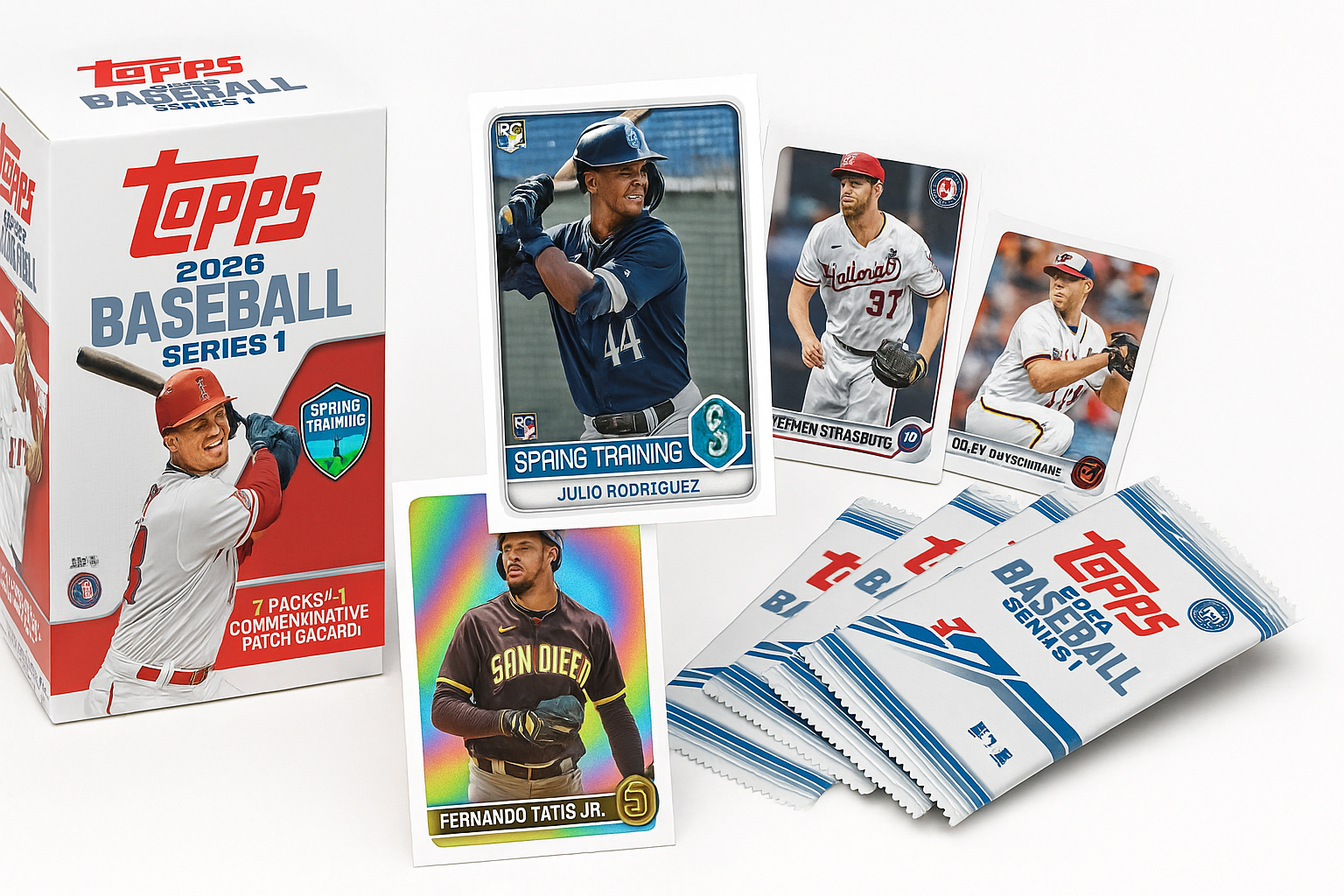
The 2026 Topps Baseball Series 1 Blaster Box of Packs with Possible Retail Exclusive Holo Foil Parallels and Blaster Exclusive Spring Training Variation Cards is a retail format of Topps’ flagship MLB card line for the 2026 season.
Series 1 marks the 75th anniversary of Topps Baseball, built around a 350-card base set that features:
- Established MLB stars
- Top rookies and future stars
- League leaders and team cards
The blaster configuration typically includes 6 packs per box with 12 cards per pack, and on average you can expect 2–3 Spring Training base card parallels per box, along with a chance at various retail-exclusive Holo Foil parallels and short prints.
While hobby and jumbo boxes focus more on guaranteed hits like autographs or relics, the blaster box is designed as an accessible, mass‑market product you’ll commonly see at big-box retailers and online sellers such as Amazon for around $24.85.
Why It Matters
Topps Series 1 is traditionally one of the most important annual baseball releases for several reasons:
-
Flagship Rookie Cards
Many collectors treat flagship Topps rookies as core long‑term holdings. If a 2026 rookie explodes into stardom, their Series 1 base and parallel cards tend to be among their most recognizable mainstream rookies. -
Set-Building Foundation
The 350-card checklist is designed for classic set building. Blasters are often the entry point for collectors looking to hand‑collate the full set without paying hobby‑box prices. -
Retail-Exclusive Content
With 2026, Topps leans heavily into retail-only Holo Foil parallels and Spring Training variations, making retail formats more than just a watered‑down version of hobby. Some of the flashier color parallels and Spring Training photo variations can only be pulled from products like this blaster. -
Accessibility and Rip Experience
For many collectors, especially newer or budget‑conscious ones, a blaster box is a low‑commitment way to enjoy the rip: multiple packs, colorful inserts, and a shot at something big, without the upfront cost of a hobby or jumbo box.
Key Advantages
1. Retail-Exclusive Holo Foil Parallels
The 2026 Series 1 retail checklist includes a deep lineup of Holo Foil and colored Holo Foil parallels that are retail exclusive. These can include colors like Pink, Yellow, Purple, Blue, Green, Orange, and more, typically in limited or serial‑numbered runs.
Highlights include:
- Standard Holo Foil inserts seeded at retail‑only pack odds
- Color Holo Foils in numbered tiers (for example, Blue, Green, Orange, and low‑print‑run Red or Rose Gold parallels)
- Themed parallels celebrating the 75th year of Topps Baseball
For collectors who enjoy colorful parallels rather than just hits, the blaster format gives a decent number of chances across multiple packs.
2. Blaster-Exclusive Spring Training Variation Cards
One of the biggest hooks of this specific SKU is the Spring Training variation content:
- Each box averages 2–3 Spring Training base card parallels
- These typically swap the standard in‑season action photography for Spring Training images—batting‑cage shots, warm‑ups, or pre‑season game action
- Certain Spring Training versions are value‑box exclusives, so they can only be pulled from products like this blaster
For player collectors or team collectors, these variations add depth to a PC (personal collection), especially when combined with serial‑numbered versions.
3. Strong Set-Building Platform
The blaster format gives you a solid volume of base cards per dollar, making it a good tool for:
- Building the full 350-card base set
- Accumulating extras for trades
- Chasing specific rookies or stars through repeated retail purchases
Because the product is widely distributed, you’re also more likely to find other collectors working on the same set, which helps with trading and completing checklists.
4. 75th Anniversary Theme and Inserts
The 75th anniversary angle brings thematic insert sets and parallel designs into the product line. Across the 2026 Series 1 family, you’ll see:
- Anniversary‑focused inserts paying tribute to iconic Topps designs
- Throwback or retro‑inspired cards that appeal to long‑time collectors
- Expanded parallel structures that give even base cards a more premium feel when pulled in low‑numbered versions
Even though blasters don’t guarantee autos or relics, they still plug into the same anniversary‑driven insert ecosystem, which keeps the rip engaging.
5. Widely Available and Relatively Budget-Friendly
Compared to hobby and jumbo boxes, this blaster lands in the entry‑level to mid‑range price band. At around $24.85, it is accessible for:
- Casual collectors who just want to enjoy opening packs
- Parents introducing kids to the hobby
- Collectors who prefer spreading their budget across several smaller rips rather than one big box
Key Limitations
1. No Guaranteed Autographs or Relics
Blaster boxes do not guarantee any autographs or memorabilia cards. While it’s possible to pull them, the odds are long, and many boxes will contain only base cards, parallels, and inserts.
If your primary goal is to hit autos or patches, you’re likely better served by hobby, jumbo, or specific premium SKUs.
2. Retail Hit Odds vs. Print Run
2026 Topps Series 1, like recent years, has a large overall print run, and retail production appears relatively high. That means:
- Serial‑numbered cards and short prints are tough pulls
- Many boxes will yield mostly base and a small number of non‑numbered parallels
For collectors focused purely on ROI or flipping, the expected value on a per‑box basis is modest at best.
3. Potential for Duplication
Because the checklist is "only" 350 cards and retail print volume is high, repeated blaster purchases can result in a lot of duplicate base. Set builders might appreciate this for trading, but casual collectors may feel like they are “seeing the same cards again” quickly.
4. Retail Distribution Variability
Retail blasters often depend on:
- Local stock levels at big-box stores
- How quickly resellers scoop inventory
If you’re not buying online from a reliable seller, availability can be inconsistent. Additionally, secondary market prices can fluctuate above or below the MSRP depending on supply and demand.
Who It’s For
This 2026 Topps Baseball Series 1 Blaster Box is a good fit for:
-
Set Builders and Base Collectors
- Want to build or nearly build the 350-card base set through multiple blasters and trades
- Enjoy sorting and organizing cards by team, player, and subset
-
Rookie and Prospect Chasers (on a Budget)
- Value having multiple shots at key rookies and parallel versions without the upfront cost of a hobby case
- Are comfortable with the reality that many boxes will be light on headline hits
-
Player or Team Collectors
- Want Spring Training variations of their favorite player or team
- Appreciate having multiple image variations and parallel colors to chase
-
Casual Collectors and Families
- Want a fun rip experience with multiple packs in a single box
- Prefer straightforward, recognizable brand names like Topps Series 1 over niche products
-
Collectors Who Like Colorful Parallels More Than Autos
- Prioritize building rainbow‑style runs of a player’s base card
- Enjoy chasing Holo Foil colors and 75th-anniversary themed parallels more than traditional hits
Who Should Skip It
You may want to skip this blaster if you fall into one of these categories:
-
Hit-Driven Collectors
If your priority is guaranteed autographs, relics, or case hits, a blaster isn’t the right fit. Hobby, jumbo, or higher‑end products offer structured guarantees and far better hit odds. -
Strict ROI/Flippers
Those buying solely to flip sealed boxes or singles for profit will find retail blasters volatile and often low return. The combination of high print runs and non‑guaranteed hits means it’s easy to end up with mostly low‑value base and inserts. -
Collectors Tired of Flagship Volume
If you’re already burned out on large flagship sets, parallels, and non‑numbered foil variations, this blaster does little to change the core formula. It amplifies it with more Holo Foils and Spring Training versions. -
Collectors Focused Only on Premium, Low-Print Products
If your collection strategy centers around short‑printed, numbered‑only, or on‑card auto products, this mass‑market flagship release will feel too broad and base‑heavy.
Final Recommendation
The 2026 Topps Baseball Series 1 Blaster Box is a solid, mainstream retail product that does exactly what a flagship blaster is supposed to do:
- Delivers a good volume of base cards from an important yearly set
- Adds retail‑exclusive Holo Foil parallels and Spring Training variations that give collectors extra reasons to rip retail over hobby alone
- Keeps the entry cost reasonable at around $24.85, making it accessible for a wide range of collectors
It’s best viewed as an enjoyment‑ and collection‑focused purchase rather than an investment‑driven one. If you like building sets, chasing colorful parallels, and sprinkling in some Spring Training photo variations, this blaster is a worthwhile pickup. If you’re chasing guaranteed hits or high‑end value, you’ll be better served saving your budget for hobby, jumbo, or premium releases.
Overall, for set builders, team and player collectors, and casual fans looking for a fun rip, the 2026 Topps Series 1 Baseball Blaster Box is an appealing way to engage with Topps’ 75th‑anniversary flagship release—provided your expectations are calibrated toward parallels and base, not guaranteed autographs.