
COSTWAY Portable Twin Tub Washing Machine (20 lbs): Compact Laundry Solution for Small Spaces
Introduction
For renters, RV owners, and students living in dorms, doing laundry often means juggling inconvenient laundromat trips or shared building machines. The COSTWAY Portable Washing Machine, Twin Tub 20 Lbs Capacity targets exactly this crowd, promising a compact, semi-automatic solution that fits into tight spaces while still handling everyday laundry needs.
This model combines a 12 lbs washer and 8 lbs spinner into one portable unit, using simple timer knobs instead of complex electronics. It’s positioned as an affordable, low-commitment alternative to installing a full-size washer or paying per-load fees elsewhere, with typical online pricing around $134.99 depending on retailer and promotions.
In this review, we’ll look closely at its design, key features, day-to-day performance, and who it’s best suited for—along with its drawbacks you should understand before buying.
Product Overview and Key Features
Twin Tub, Semi-Automatic Design
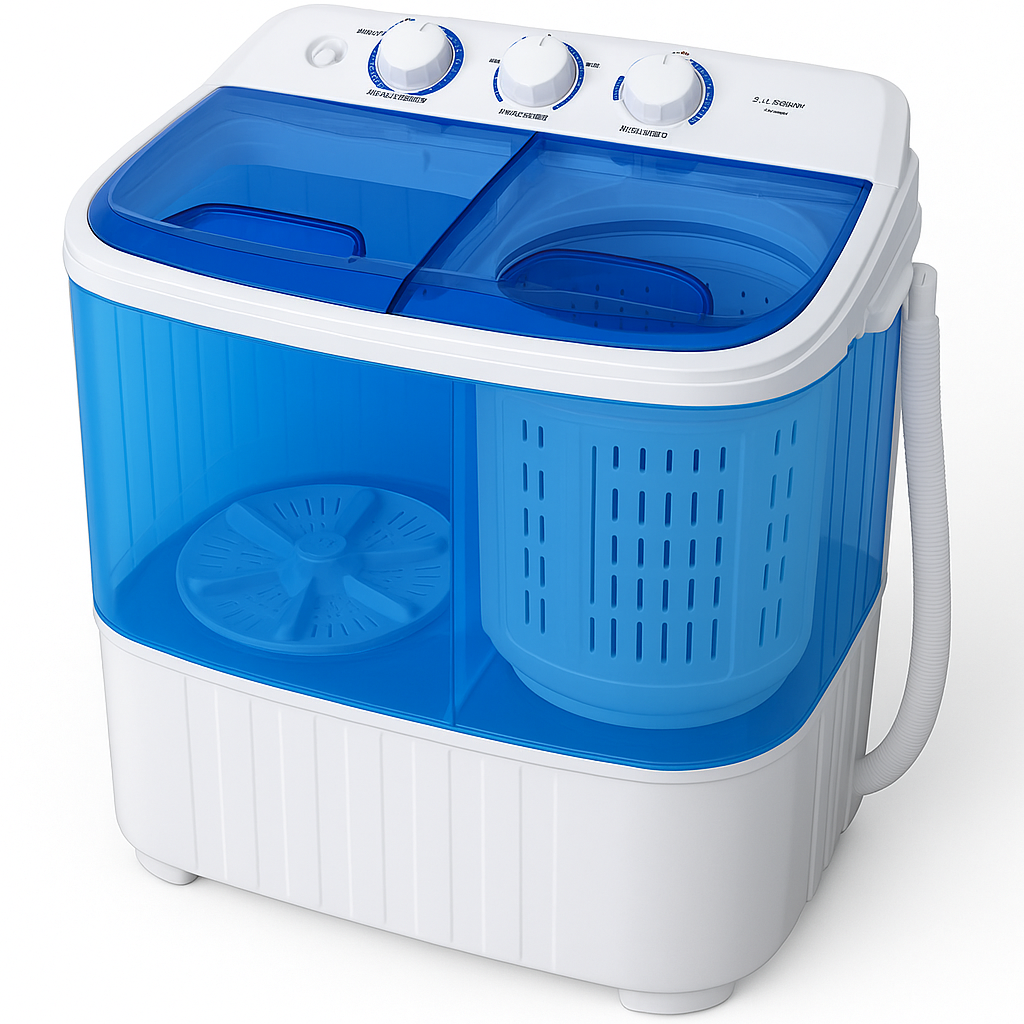
The standout feature of this COSTWAY unit is its twin-tub layout:
- Washer tub capacity: 12 lbs (for washing)
- Spinner tub capacity: 8 lbs (for spin-drying)
You can run the washer and spinner simultaneously, for example washing a second small load while the first load is spinning. That can significantly reduce total laundry time compared to a single-tub portable washer.
This is a semi-automatic machine. You manually:
- Load clothes and detergent
- Fill the wash tub with water (typically via a faucet and included inlet hose or a bucket)
- Set the wash timer and wash mode
- Drain the water using the gravity drain hose
- Move clothes to the spinner and set the spin timer
There’s no automatic water-level sensing or built-in pump, which keeps the design simpler and more portable but requires a bit more hands-on involvement.
Capacity and Dimensions
For a compact model, the total 20 lbs rated capacity (12 lbs washer + 8 lbs spinner) is generous and suitable for:
- Daily clothes for 1–2 people
- T-shirts, underwear, light pants, and small towels
- Occasional light bedding (such as pillowcases or thin sheets)
However, like most portables, it’s not ideal for:
- Heavy comforters
- Very bulky blankets
- Large, heavily soiled family-sized loads
Physical dimensions (approx.) place it in the mini washer category, with a footprint small enough for:
- Bathroom corners
- Small laundry closets
- RV or camper interiors
- Studio or one-bedroom apartments
The blue-and-white plastic housing keeps the unit lighter than metal-bodied machines, making it easier to move when needed.
Controls and Operation
The control panel is intentionally simple, typically offering three rotary knobs:
- Wash selector: Normal / Gentle / Drain (varies slightly by batch and region)
- Wash timer: Up to 15 minutes
- Spin timer: Up to 5 minutes
This simplicity is a benefit if you prefer straightforward mechanical controls instead of digital boards that can fail. It also means a very short learning curve: most users can figure out the basic operation within a single load.
Motor Power and Build
Internally, the COSTWAY twin tub uses separate motors for washing and spinning, commonly rated around 300–330W for washing and 110W for spinning. In practice this is sufficient for:
- Agitating small to medium loads effectively
- Reaching high-enough spin speeds to remove a large portion of water
Other notable build aspects:
- Polypropylene (PP) tub and body: Rustproof and lighter than steel
- Transparent lid(s): Let you monitor wash and spin cycles
- Side filter: Helps catch lint during washing
- Side handles: Aid in lifting and repositioning the unit
Plumbing Requirements
Because this machine relies on gravity drain, setup is most convenient if you have:
- A floor drain, shower drain, or low bathtub edge for the drain hose
- A nearby faucet that can accept the included adapter (or a compatible aftermarket adapter)
If your faucet threading doesn’t match the included adapter, expect a small amount of extra setup work or the need to fill by bucket.
Performance and User Experience
Washing Performance
For its size and price category, the COSTWAY twin tub delivers solid cleaning performance on light to moderately soiled laundry.
What it handles well:
- Everyday clothing (T-shirts, underwear, socks, sleepwear)
- Light workout gear and loungewear
- Small towels and kitchen linens
When loads are sized properly (not overstuffed), users typically report:
- Even agitation throughout the load
- Clothes emerging visibly cleaner than hand-washing in a tub
- Good results with standard liquid or powder detergents (high-efficiency detergents can be used in reduced doses)
To get the best results, you should:
- Avoid cramming the full advertised weight if items are bulky
- Distribute items evenly around the impeller
- Use the full 12–15 minute wash time for more soiled loads
Spin-Drying Effectiveness
The 8 lbs spinner is one of the stronger points of this model:
- It removes a large amount of water in just a 3–5 minute spin cycle
- Clothes come out damp rather than dripping, which significantly reduces air-drying time
If you’re line-drying indoors or in an RV, the strong spin performance helps reduce:
- Drying time
- Indoor humidity
That said, you must balance loads carefully in the spinner—heavy items like jeans or towels placed unevenly can cause vibration or noisy operation. Breaking a single wash load into two smaller spin loads often yields smoother, quieter spinning.
Noise and Vibration
Noise levels vary with load balance and flooring, but generally this unit is considered moderately quiet for a twin-tub portable:
- The wash cycle is a steady mechanical hum with water sloshing
- The spin cycle is louder, especially if items are off-balance, but typically still reasonable for apartment use during daytime hours
To minimize disturbance:
- Place the machine on a flat, stable surface
- Avoid overloading or unevenly loading the spinner
- Use anti-vibration pads if your floor is particularly resonant
Water and Energy Use
Because you manually control water levels and cycle length, this washer can be quite water- and energy-efficient when used mindfully:
- Wash smaller loads with just enough water to cover the clothes
- Reuse rinse water for a subsequent lightly soiled load when appropriate
- Use the shortest effective spin time to reduce wear on the motor
Over time, users often find that the machine helps cut laundromat costs and reduce trips, which may offset its purchase price relatively quickly if you previously paid per load.
Ease of Use and Learning Curve
There is some initial adjustment if you’re used to fully automatic machines:
- You must remember to switch from wash to drain, then transfer clothing to the spinner
- Water temperature control depends on your faucet, not the machine itself
- You’ll want to establish a personal routine for wash, rinse, and spin steps
Once familiar, many users appreciate the control and flexibility—you can:
- Stop and soak items mid-cycle
- Perform extra rinse cycles for sensitive skin
- Quickly wash a small batch of items on demand
Durability and Maintenance
The plastic body is rust-resistant, which is useful in humid bathrooms or RVs. Long-term durability will depend heavily on:
- Avoiding overloading the tubs
- Keeping the drain hose unobstructed
- Periodically cleaning the lint filter
Common maintenance tasks:
- Rinsing the tub and filter to prevent lint buildup
- Ensuring the drain hose isn’t kinked
- Letting the machine dry with lids open occasionally to reduce odors
As with many budget-oriented compact appliances, long-term reliability can vary. Treating it as a light- to moderate-duty machine, not a full replacement for heavy family use, will generally yield better lifespan.
Pros and Cons
Pros
- Compact footprint: Fits easily in small apartments, dorm rooms, and RVs.
- Twin-tub convenience: Wash and spin at the same time to shorten laundry sessions.
- Decent capacity for a portable: 12 lbs washer and 8 lbs spinner are ample for 1–2 people.
- Strong spin performance: Clothes come out only damp, reducing drying time.
- Simple mechanical controls: Timer knobs are easy to understand and less complex than digital panels.
- Lightweight and portable: Plastic construction and side handles make moving and storing the unit feasible.
- Potential cost savings: Over time can reduce or eliminate laundromat visits and per-load fees.
- Versatile placement: Can be used in bathrooms, balconies (where allowed), or RVs with minimal plumbing.
Cons
-
Manual operation required: You must fill, drain, and transfer clothes between tubs—no fully automatic cycles.
-
Gravity drain only: Works best with a low drain point; less convenient for some sink setups.
-
Limited for large/bulky items: Not ideal for heavy bedding or big family loads.
-
Load balancing needed: Spinner can vibrate or get noisy with uneven loads.
-
Build feels budget-oriented: Lightweight plastic is practical but doesn’t feel as robust as full-size machines.
-
Adapter compatibility may vary: Some faucets may require an additional or different adapter than the one included.
Conclusion and Recommendation
The COSTWAY Portable Washing Machine, Twin Tub 20 Lbs Capacity is best viewed as a practical, budget-friendly laundry helper rather than a direct substitute for a full-size automatic washer.
It excels if you:
- Live in an apartment, RV, or dorm with no built-in laundry
- Typically wash small to medium loads for one or two people
- Want to save money and time compared with frequent laundromat trips
- Don’t mind a bit of hands-on involvement with filling, draining, and transferring clothes
You may want to look elsewhere if you:
- Need to wash large family loads or bulky bedding regularly
- Require a fully automatic solution with minimal manual steps
- Have no suitable spot for gravity draining the hose
Considering its portable form factor, reasonable capacity, and straightforward mechanical controls, the COSTWAY twin tub offers good value at around $134.99 for the right user profile. If your priority is a compact washer that can handle day-to-day clothing and small linens in a tight space, this model is a strong contender—provided you’re comfortable with its semi-automatic nature and modest, budget-level build.