
DJI Mini 3 Review: A Travel‑Friendly 4K Drone for Beginners and Casual Creators
DJI Mini 3 Review: A Travel‑Friendly 4K Drone for Beginners and Casual Creators
Introduction
The DJI Mini 3 is positioned as a compact, beginner‑friendly 4K camera drone that keeps many of DJI’s headline features while staying under the 249 g threshold, which in many regions reduces or simplifies registration requirements. It features:
- A 1/1.3‑inch CMOS sensor with 4K HDR video
- Up to 38‑minute advertised flight time per battery with the standard Intelligent Flight Battery
- Up to 10 km (32,800 ft) video transmission range (OcuSync 2.0 in most regions)
- True Vertical Shooting via a rotating gimbal for phone‑friendly content
- GPS‑based auto return‑to‑home (RTH) and basic safety features
On Amazon, the DJI Mini 3 in this configuration often sits in the mid‑range consumer price bracket around $389.00, making it attractive to first‑time drone buyers who still want credible image quality and a solid feature set.
Typical Use Cases
1. Travel and Vacation Footage
The Mini 3’s foldable arms and sub‑249 g weight make it highly portable. It fits easily into a small shoulder bag or camera backpack, and its low takeoff weight helps keep it below common regulatory thresholds in many countries (though you must always check local laws before flying).
For travel, this makes it suitable for:
- Scenic beach and coastline shots
- Mountain viewpoints and hiking trails
- City skylines (where legally permitted)
- Road‑trip b‑roll from rest stops and overlooks
2. Social Media and Vertical Content
True Vertical Shooting is a core selling point. Instead of cropping horizontal footage, the Mini 3 physically rotates the camera to capture native vertical video and photos, which:
- Maximizes resolution for Instagram Reels, TikTok, and YouTube Shorts
- Simplifies editing, as you don’t need to reframe for 9:16
- Helps keep composition clean around tall subjects like waterfalls, buildings, and trees
3. Casual Content Creation and Family Events
For casual users, the Mini 3 is a versatile tool for:
- Filming family gatherings and picnics in parks
- Capturing backyard activities or sports in open fields
- Documenting DIY projects, home improvements, or real‑estate‑style overviews (where allowed)
Built‑in QuickShots modes (such as Dronie, Circle, Helix, and Rocket) help non‑experts capture cinematic‑looking clips with a few taps.
4. Light Commercial and Real‑Estate Style Work
While the Mini 3 is not DJI’s flagship professional platform, its image quality and stability can be sufficient for:
- Simple aerial property overviews
- Basic marketing content for small businesses
- Supplementary b‑roll for YouTubers and content creators
Professionals might still gravitate toward the Mini 3 Pro or higher‑end Mavic lines for more advanced obstacle avoidance and higher‑bitrate recording, but the Mini 3 can cover light tasks on a budget.
5. Learning to Fly and Practice
The Mini 3’s beginner‑friendly controls, safety features, and relatively low weight make it a good option for pilots who are:
- Learning manual orientation (nose‑in, tail‑in, side‑on)
- Practicing smooth panning and tracking maneuvers
- Getting comfortable with RTH behavior and flight planning
The DJI Fly app provides tutorials, on‑screen prompts, and easy access to safety settings, helping new users ramp up quickly.
Performance in Each Scenario
Flight Performance and Handling
Stability and wind resistance
Rated for approximately Level 5 wind resistance (around 38 kph), the Mini 3 holds position surprisingly well for its size. In moderate breezes it generally maintains a stable hover and smooth footage, though users should expect more drift and gimbal compensation effort than with heavier drones.
Flight time
Under typical mixed‑use conditions (frequent maneuvering, some filming, some hovering), real‑world users often report around 25–30 minutes of safe usable time before landing, slightly below the 38‑minute laboratory claim, but still strong for a compact drone. With multiple batteries, it’s feasible to cover several locations in a single outing.
Range and signal
The up‑to‑10 km video transmission spec assumes optimal conditions with minimal interference and is more about link robustness than actual intended flying distance. In realistic suburban or semi‑rural environments, expect:
- Solid HD video link in the 1–3 km range under clear line‑of‑sight
- Earlier signal degradation in dense urban areas due to Wi‑Fi and building interference
Camera and Image Quality
The 1/1.3‑inch sensor is a strong point compared to many entry‑level drones that use smaller sensors. In practice:
- Daylight video: 4K footage is crisp with good detail, especially in bright conditions. Dynamic range is respectable for a small sensor, and HDR modes can help retain detail in skies and shadows.
- Low‑light video: Thanks to the relatively bright f/1.7 aperture, twilight and early evening shots are usable, but noise and smearing in fine textures will appear as light levels drop further.
- Photos: Stills are well‑detailed for social and web use. For serious print work, larger‑sensor drones will still have an edge.
True Vertical Shooting preserves full sensor height for 9:16 framing, which is notable if your primary output is mobile‑first vertical platforms.
Intelligent Features and Safety
The Mini 3 includes several intelligent modes and safety tools, though it lacks the more advanced obstacle avoidance of the Mini 3 Pro and higher models.
- GPS‑based positioning and RTH: The drone locks onto GPS, GLONASS and related constellations (availability varies by region) for position hold. RTH can be triggered manually, on signal loss, or when the battery reaches a critical level.
- QuickShots: Pre‑programmed flight paths help capture cinematic orbits, pull‑aways, and vertical moves with minimal piloting skill.
- Auto takeoff and landing: One‑tap controls simplify Launch and RTH for new pilots.
The absence of forward/rear obstacle sensors on the base Mini 3 means pilots must remain vigilant, especially when flying near trees, power lines, and buildings.
Remote Controllers
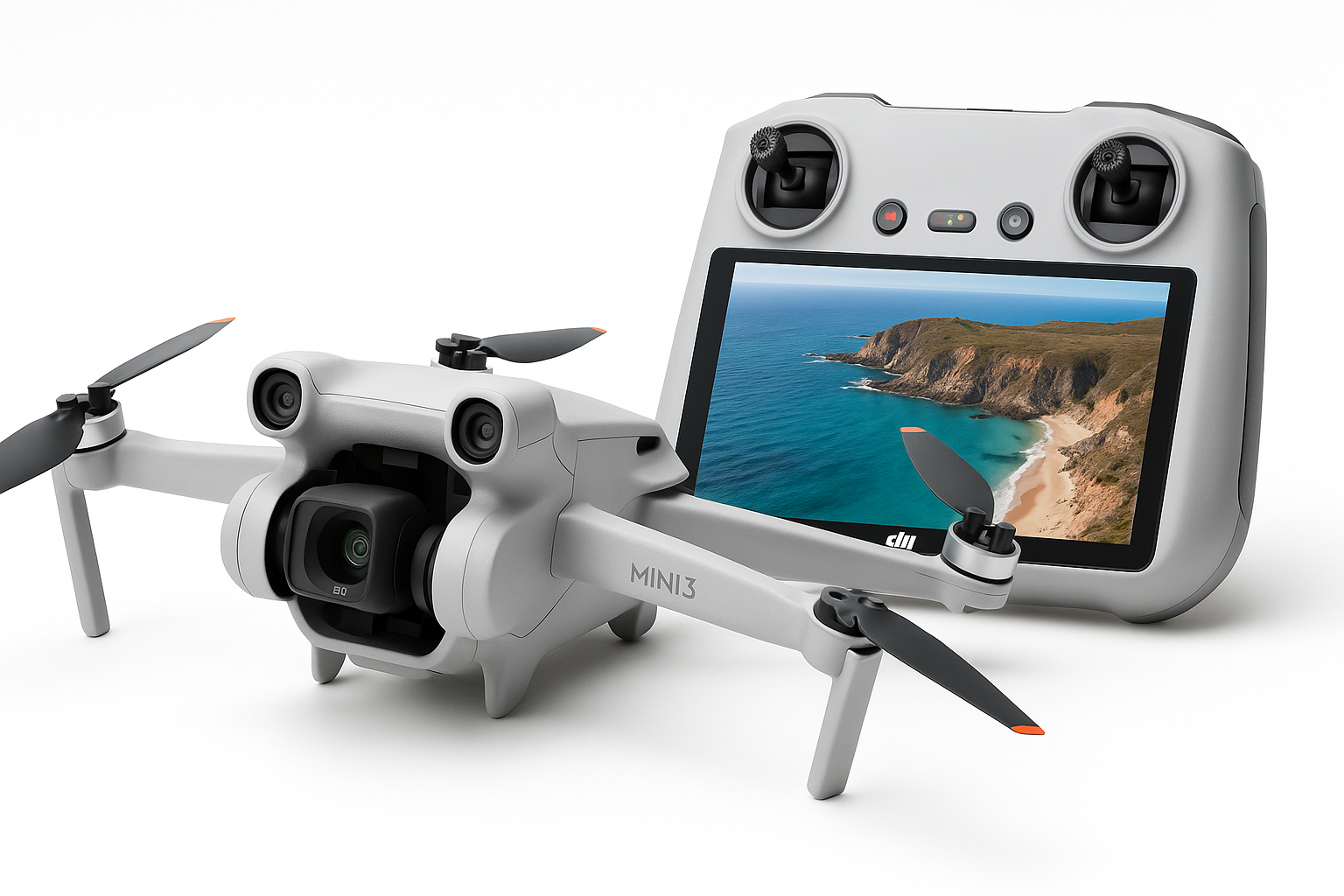
Depending on the bundle, the Mini 3 can be paired either with:
- DJI RC‑N1: Uses your smartphone as the screen; more affordable and flexible if you like using third‑party apps on your phone.
- DJI RC: Integrates a dedicated 5.5‑inch screen, which reduces setup time and frees your phone.
The Amazon listing in question focuses on the aircraft and core capabilities; bundles with different controllers and accessories will change the overall cost, which is why it’s useful to compare versions around $389.00 before you commit.
Strengths Across Scenarios
-
Portability and Low Weight
- Under‑249 g takeoff weight makes it ideal for travel and casual flying.
- Foldable design fits into small bags and even large jacket pockets.
-
Beginner‑Friendly Experience
- Intuitive DJI Fly app interface with tutorials and safety prompts.
- One‑tap takeoff/landing and RTH reduce beginner mistakes.
- QuickShots and intelligent flight modes help capture cinematic clips with minimal skill.
-
Solid Image Quality for the Size
- 1/1.3‑inch sensor with 4K HDR video produces detailed, vibrant footage in daylight.
- True Vertical Shooting natively supports vertical platforms without cropping.
- 3‑axis mechanical gimbal keeps footage stable even in moderate wind.
-
Efficient Flight Time
- Advertised 38‑minute flight time per standard battery is competitive in this class.
- Real‑world 25–30 minutes of safe flying still outperforms many older compact drones.
-
Good Value for Feature Set
- At around $389.00 (exact pricing varies by seller and bundle), the Mini 3 sits in a sweet spot for beginners who want:
- True 4K capture
- Reliable GPS and RTH
- A mature flight and camera ecosystem
- At around $389.00 (exact pricing varies by seller and bundle), the Mini 3 sits in a sweet spot for beginners who want:
-
Ecosystem and Accessory Support
- Compatibility with widely available DJI accessories like extra batteries, charging hubs, ND filters, and carrying cases.
- Strong third‑party ecosystem (bags, mounts, landing pads, etc.).
Limitations Across Scenarios
-
Limited Obstacle Avoidance
- The base Mini 3 lacks the more comprehensive multi‑directional obstacle sensing found in the Mini 3 Pro and newer Mini 4 models.
- Pilots must be especially cautious in cluttered environments, flying higher and maintaining clear line‑of‑sight to avoid collisions.
-
Bitrate and Advanced Image Controls
- While 4K HDR is available, video bitrate and advanced color profiles are more limited than on higher‑end drones.
- For pro‑grade grading workflows, content creators may find the footage less flexible in post compared to DJI’s more expensive lines.
-
Wind and Weather Constraints
- Despite its rated wind resistance, the lightweight airframe is still more affected by gusts than heavier drones.
- In strong wind, the drone may tilt aggressively to hold position, and battery drains faster.
- It is not weather‑sealed; flying in rain, heavy fog, or snow is not recommended.
-
Regulatory Nuances Still Apply
- Being under 249 g simplifies rules in many regions, but does not exempt pilots from all regulations.
- Users are still responsible for checking local laws, airspace restrictions, and registration requirements.
-
Not a Heavy‑Lift or Accessory Platform
- Payload capacity is very limited. It is not made for carrying action cams, third‑party gimbals, or specialized sensors.
- This keeps it squarely in the consumer/enthusiast imaging category.
-
Controller and Bundle Fragmentation
- Multiple bundles (with or without the DJI RC display controller, Fly More kits, etc.) can be confusing.
- Some users might discover post‑purchase that the base kit doesn’t include enough batteries or a charging hub, raising the effective cost beyond the headline $389.00.
Verdict
The DJI Mini 3 is an excellent entry point into aerial photography for beginners, travelers, and casual content creators who prioritize portability, ease of use, and solid 4K image quality over professional‑grade controls and obstacle avoidance.
You should consider the DJI Mini 3 if:
- You’re new to drones and want a low‑stress way to learn.
- You travel frequently and need something that won’t weigh down your bag.
- Your primary outputs are social media posts, YouTube videos, and family footage.
- You appreciate True Vertical Shooting and want native 9:16 capture.
You might want to look higher in DJI’s lineup if:
- You plan to fly in more complex environments where enhanced obstacle sensing is critical.
- You need higher‑bitrate recording, advanced color profiles, or more robust low‑light performance.
- You’re doing paid work where redundancy and additional safety features justify the extra cost.
Overall, at around $389.00 depending on the specific bundle, the DJI Mini 3 delivers a strong balance of performance, portability, and value. For many first‑time buyers and hobbyist creators, it will be more than capable of capturing the kind of cinematic aerial shots they imagined when they first decided to buy a drone.