
Kinsa QuickCare Smart Thermometer Review: Fast, Connected Fever Tracking for the Whole Family
Quick Summary
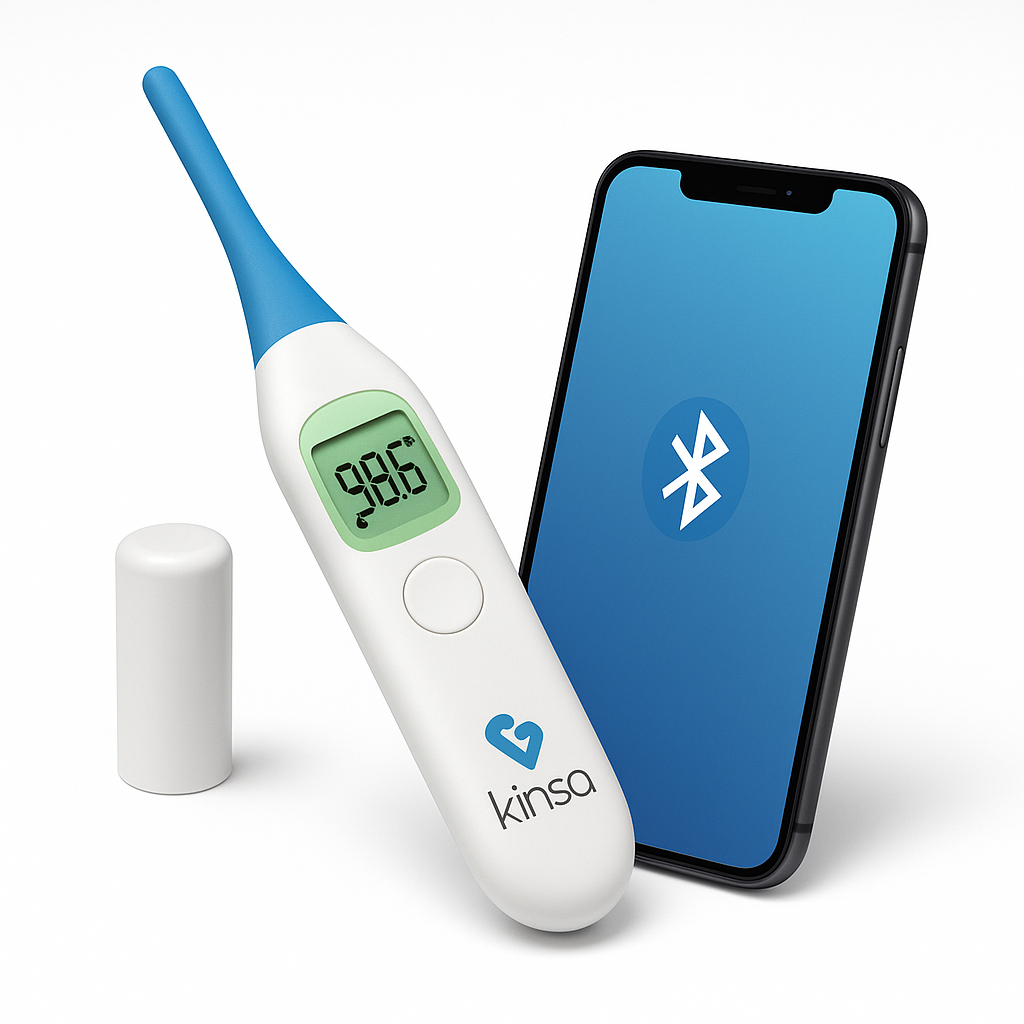
The Kinsa QuickCare Smart Thermometer is a flexible, family‑oriented digital thermometer that combines fast readings with smartphone connectivity. It can be used orally, under the arm, or rectally, and it’s FDA cleared for clinical‑grade accuracy. A soft, flexible tip and a lighted display make it practical for use with infants through adults, while the Kinsa app adds long‑term tracking, multiple user profiles, and basic guidance on when to seek medical care.
For households that want more than just a one‑off temperature reading, the QuickCare offers an appealing balance of speed, ease of use, and connected features at around $18.50 on Amazon.
Detailed Analysis
Design and Build Quality
The Kinsa QuickCare has a slim, wand‑style form factor with a flexible tip that’s more comfortable than rigid plastic, especially for oral and pediatric rectal use. The build feels solid for a home thermometer, and the sealed design is intended for hand‑wash only cleaning rather than full submersion.
Key physical features:
- Flexible, soft tip for comfort
- Backlit digital display that’s easy to read in low light
- Fever indication icons to quickly flag normal, elevated, or high temperatures
- Single multifunction button for power and basic control
- Replaceable CR2032 coin battery, included and user‑replaceable
Overall, the design is practical and family‑friendly: simple enough for non‑technical caregivers, but refined enough to feel trustworthy in everyday use.
Measurement Modes and Performance
The thermometer supports three standard measurement sites:
- Oral – For older children and adults; typically the fastest and most convenient.
- Armpit (axillary) – Helpful for younger kids or users who can’t reliably keep the thermometer under the tongue.
- Rectal – Recommended for infants and young toddlers when you need the most consistent readings.
In all modes, the QuickCare aims for under 8‑second readings under typical conditions. In practice, this speed makes a noticeable difference with squirmy toddlers or sick adults who don’t want to sit still.
Kinsa lists the device as FDA cleared and compliant with relevant ASTM standards, which indicates it has met baseline regulatory requirements for safety and accuracy when used as directed. As with any digital thermometer, you’ll get the best results by:
- Positioning the tip correctly (especially for armpit and rectal use)
- Keeping the mouth closed and minimizing movement during oral readings
- Waiting 15–30 minutes after eating or drinking before taking an oral temperature
Connectivity and App Integration
One of the main differentiators of the Kinsa QuickCare is its Bluetooth connection to the free Kinsa smartphone app (iOS and Android). While the thermometer can be used standalone, pairing it unlocks much of its value.
With the app, you can:
- Automatically log temperature readings without manual entry
- Create individual profiles for each family member (baby, kids, adults)
- Record symptoms, medications, and timing alongside each reading
- View a timeline of illness to see how fevers are progressing over days
- Get basic guidance based on age, symptoms, and temperature (for example, when to consider calling a doctor vs. monitoring at home)
Pairing typically involves turning on Bluetooth, opening the Kinsa app, and following on‑screen prompts while the thermometer is powered on. Once paired, readings taken near your phone are usually synced automatically.
This connected ecosystem is especially useful for:
- Parents managing repeated fevers in young children
- Caregivers coordinating between multiple people (parents, babysitters, grandparents)
- Anyone who wants a clear record to share with a pediatrician or primary care provider
Battery and Maintenance
The QuickCare is powered by a single CR2032 lithium coin cell. When the battery runs low you’ll see a low‑battery icon, and replacement is a quick process: open the compartment, swap in a new CR2032 with correct polarity, and close it securely.
Maintenance is straightforward:
- Cleaning – Wipe the tip and body with rubbing alcohol or soap and water on a cloth; rinse the tip and dry thoroughly. Do not submerge the entire device or use harsh chemicals.
- Storage – Keep in a clean, dry place at room temperature, away from direct sunlight and out of children’s reach.
User Experience
Everyday Use
For daily or occasional fever checks, the QuickCare feels intuitive:
- Press the button to power on.
- Place the thermometer (oral, axillary, or rectal) and hold in place.
- Wait for the audible/visual cue indicating the reading is complete.
- Read the backlit display, or open the app to see the logged result.
The lighted screen is particularly helpful for nighttime checks, and the flexible tip reduces discomfort and the risk of accidental pokes.
App Experience
The overall app experience is focused on clarity and guidance:
- Color‑coded readings and simple icons indicate fever severity.
- Symptom and medication logging reduce guesswork when discussing illness history with a clinician.
- Multiple user profiles help avoid mixing readings between siblings.
The main caveat is that to benefit from automatic tracking, you need to:
- Have your phone nearby with Bluetooth enabled, and
- Keep the Kinsa app installed and updated.
For users who prefer a completely app‑free, analog experience, the connectivity may feel like overkill. But for most smartphone‑centric families, it adds meaningful context to simple temperature checks.
Reliability and Limitations
When used properly, readings are generally consistent and within the expected range of a quality digital thermometer. Potential pain points include:
- Pairing hiccups – As with most Bluetooth devices, occasional connection or pairing retries may be needed, especially after phone OS updates.
- Technique sensitivity – Underarm and rectal methods in particular require careful placement and stillness to ensure accurate readings.
- Battery dependence – As with any digital thermometer, a dead battery means no reading until replaced.
Pros
- FDA‑cleared accuracy with support for oral, armpit, and rectal measurements
- Fast readings (typically under 8 seconds), reducing discomfort and fidgeting
- Flexible tip and backlit display for safe, comfortable use in babies, kids, and adults
- Bluetooth connectivity to the Kinsa app for automatic logging and multi‑user profiles
- Symptom and medication tracking with basic, age‑aware guidance in the app
- Single CR2032 battery is widely available and easy to replace
- Compact, travel‑friendly form factor suitable for home or on‑the‑go use
Cons
- Full value depends on the app; some users may not want to manage another connected device
- Occasional Bluetooth pairing issues can occur, particularly after phone or app updates
- Requires proper technique for accurate underarm and rectal readings
- Coin‑cell battery may be less convenient to replace than AA/AAA for some households
- Not designed for ear or forehead readings, which some users prefer for very quick, contact‑light checks
Value Assessment
At approximately $18.50 on Amazon, the Kinsa QuickCare sits in the mid‑range of digital thermometers while offering significantly more functionality than basic non‑connected models.
You’re paying for more than a simple sensor:
- Fast, multi‑site measurements for all ages
- Connected tracking and guidance that can genuinely assist in managing recurring or prolonged fevers
- Family‑wide profiles and logs, which many parents find valuable when speaking with pediatricians or urgent‑care providers
For households that only need a thermometer once or twice a year and don’t care about logging, a simpler non‑smart thermometer may be more economical. But for families with young children, frequent infections, or caregivers who appreciate data‑driven health tracking, the added features justify the premium over a basic device.
Final Thoughts
The Kinsa QuickCare Smart Thermometer is a thoughtfully designed, FDA‑cleared digital thermometer that brings fever tracking into the smartphone era. Its combination of flexible multi‑site use, sub‑10‑second readings, and robust app integration makes it particularly well‑suited to families with children or anyone who values clear, organized health records.
If you’re looking for a reliable thermometer that does more than flash a single number—and you’re comfortable using a companion app—the Kinsa QuickCare is a strong, well‑rounded option to consider at its current Amazon price of around $18.50.