
Project Hail Mary: A Novel – A Smart, High-Stakes Sci‑Fi Survival Story
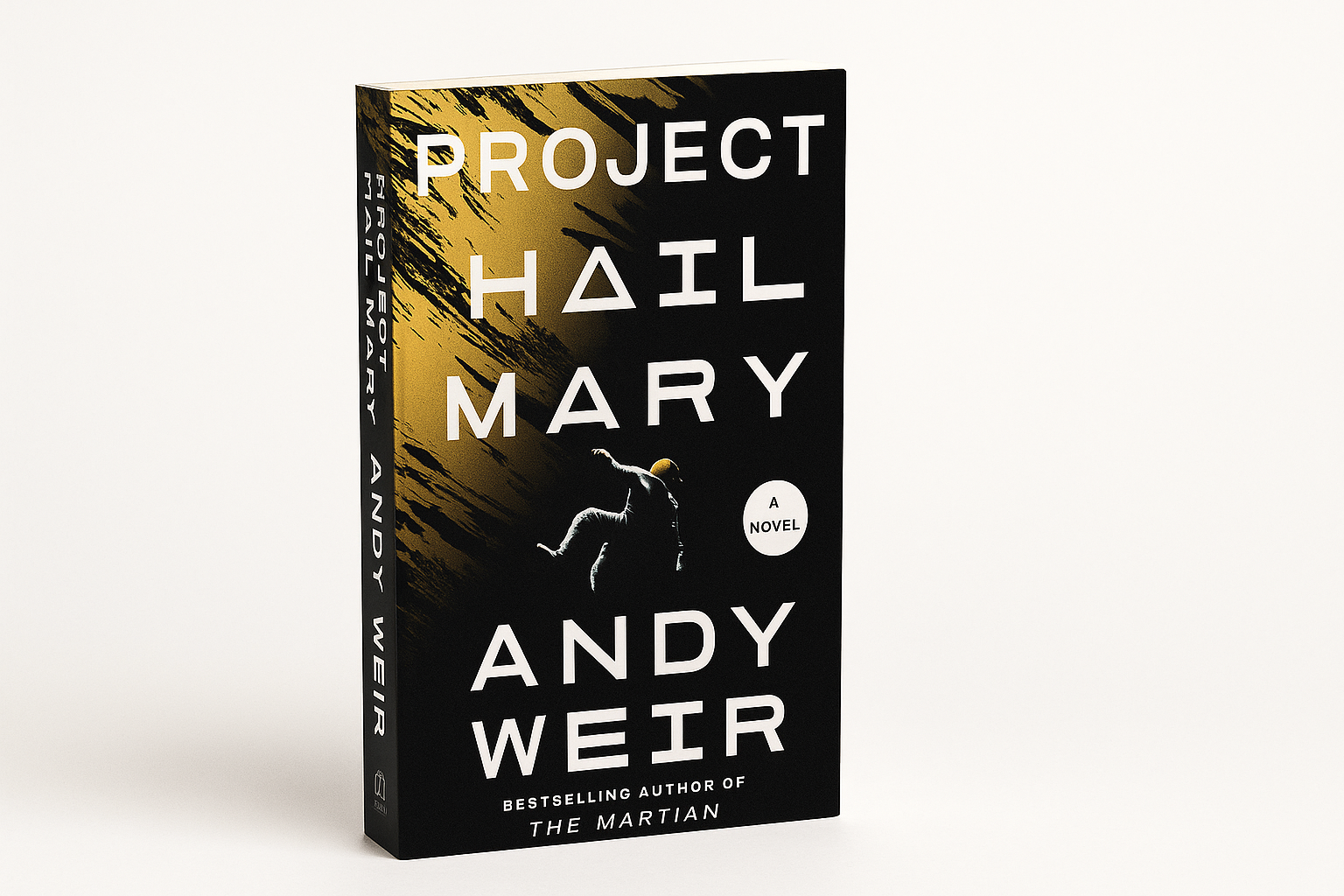
Product Summary
Project Hail Mary: A Novel is a 2021 hard science fiction book by Andy Weir, best known for The Martian. Here, Weir returns to a familiar formula—an isolated protagonist, relentless technical challenges, and a science‑first approach—but layers in a broader, interstellar mystery.
The story follows Ryland Grace, a junior high science teacher and former scientist who wakes from a coma aboard a spacecraft with no memory of who he is or why he’s there. As his memory gradually returns, he discovers that he is the sole survivor of a last‑chance mission to save Earth from an extinction‑level threat: a microscopic lifeform draining energy from the Sun. From that point on, the novel becomes a blend of puzzle‑solving, improvisational engineering, and unexpected first contact.
In this edition (ISBN‑10: 0593135229), you’re typically getting the widely available paperback format sold through major retailers like Amazon. The book frequently sees promotional pricing, so it’s worth checking the current cost (for example, around $13.98 on Amazon at the time of writing, though this can fluctuate).
Target Users
Project Hail Mary is best suited for:
- Readers who enjoy science‑heavy fiction – If you like detailed explanations of orbital mechanics, biology, and engineering, this will feel right at home.
- Fans of The Martian – The tone, pacing, and problem‑solving structure are spiritual successors to Weir’s breakout hit.
- Casual sci‑fi readers looking for an accessible entry point – Despite the dense science, Weir explains concepts in plain language, often with humor.
- Listeners and multi‑format readers – There is a highly regarded audiobook edition narrated by Ray Porter; owning the paperback plus audio works well for readers who like to switch formats.
It may be less ideal for:
- Readers who prefer character drama over plot and puzzles.
- Those who find heavy exposition or technical detail exhausting.
- Readers looking for hard, cynical or dystopian sci‑fi; this book is notably optimistic and heartfelt.
Main Benefits
1. Engaging, High‑Concept Premise
The core setup—one person alone in deep space on a do‑or‑die mission to save Earth—creates instant high stakes. The added twist of amnesia lets the reader discover the mission details alongside Ryland, which keeps the early chapters propulsive.
2. Science‑Driven Problem Solving
Weir’s signature strength is showing characters using real or plausibly extrapolated science to get out of impossible situations. Project Hail Mary leans heavily into this, with extended sequences of experimentation, data analysis, and on‑the‑fly engineering. If you enjoy watching problems get broken down systematically, the book is deeply satisfying.
3. A Surprisingly Emotional Core
Without spoiling specifics, the book introduces a key relationship that becomes the emotional backbone of the story. The dynamic starts as a communication puzzle and evolves into an unlikely partnership that gives the novel a surprising amount of warmth and heart.
4. Fast Pacing and Clear Prose
Even when the concepts get technical, the writing style remains straightforward and conversational. Chapters are short, often ending on minor cliffhangers, which makes the nearly 500‑page length feel manageable.
5. Strong Standalone Story with Movie Tie‑In Appeal
Project Hail Mary is a complete, self‑contained narrative with a clear arc and resolution—no prior reading required. And with a major film adaptation tied to this novel, the paperback edition (ISBN 0593135229) is positioned as a convenient way to experience the original story before or after watching the movie.
Key Considerations
Before you pick up Project Hail Mary, keep the following in mind:
-
Heavy Emphasis on STEM Topics
A large portion of the narrative revolves around physics, astrophysics, and biology. Explanations are simplified for lay readers, but the density is still higher than in most mainstream sci‑fi. -
First‑Person, Quippy Narrative Voice
The book is told from Ryland Grace’s point of view, with a tone that’s casual, self‑deprecating, and often jokey. If you liked Mark Watney’s voice in The Martian, this will feel familiar; if you found that style grating, it may be a sticking point again. -
Flashback Structure
The story alternates between present‑day scenes aboard the Hail Mary and flashbacks that return as Ryland’s memory resurfaces. Most readers find this structure effective, but if you prefer strictly linear stories, you may experience occasional pacing friction. -
Length and Detail
At roughly 480–500 pages depending on edition, this is a substantial read. The detailed breakdowns of each experiment or engineering task can slow things down for readers who prefer a more streamlined narrative. -
Tone Skews Optimistic and Accessible
While the stakes are apocalyptic, the overall mood is more hopeful than bleak. That makes the book broadly appealing, but those wanting grimdark or philosophically heavy sci‑fi may find it lighter than expected.
Pros
- Compulsively readable structure: Short chapters and well‑timed reveals make it easy to keep turning pages.
- Robust scientific grounding: The problem‑solving feels methodical and coherent, giving the story a sense of realism even in fantastical scenarios.
- Memorable central relationship: The bond Ryland forms in space is one of the most distinctive elements of the book and elevates it beyond a pure tech thriller.
- Clear, approachable explanations: Complex ideas are broken down without requiring prior expertise.
- Standalone, complete story: No cliffhangers or required sequels to get a satisfying ending.
- Good value as a re‑read: Because so many moments hinge on scientific puzzles, a second read can be rewarding once you know how the pieces fit.
Cons
- Repetitive problem‑solving loops: Some readers may feel the book cycles through a similar pattern of “new problem → brainstorm → test → fix” once too often.
- Limited character variety: Outside of Ryland and a few key figures, the supporting cast is comparatively thin.
- Humor may not land for everyone: The light, quippy internal monologue can undercut tension for readers who prefer a more serious tone.
- Science occasionally stretches plausibility: This is still fiction; a few solutions require generous suspension of disbelief, especially for scientifically savvy readers.
- Longer than necessary for some tastes: With extensive technical detail, readers primarily interested in plot beats might feel the story could be tighter.
Alternatives
If you’re considering Project Hail Mary but want to weigh similar options, here are some natural comparison points:
-
The Martian by Andy Weir
If you haven’t read Weir before, many readers still regard The Martian as his most balanced mix of character, humor, and science. It’s also more grounded, with its Mars setting and NASA framework. -
Artemis by Andy Weir
A lunar‑set heist story that’s lighter on the grand existential stakes but maintains Weir’s focus on realistic engineering challenges. Good if you want something shorter and more crime‑oriented. -
Children of Time by Adrian Tchaikovsky
For readers who like big scientific ideas and non‑human intelligence but want a more epic, multi‑generational scope, this is a strong candidate. -
Blindsight by Peter Watts
If what you’re really after is deeply philosophical, challenging first‑contact fiction, this offers a much darker and more complex alternative.
Project Hail Mary sits in the sweet spot between mainstream accessibility and hard sci‑fi rigor. If your priority is a page‑turning, science‑driven adventure with an emotional core, it’s likely the better starting point among these.
Conclusion
Project Hail Mary: A Novel delivers exactly what many readers hope for from Andy Weir: a clever, high‑stakes survival story built on concrete scientific reasoning rather than vague technobabble. Ryland Grace is an engaging, if occasionally over‑quippy, narrator; the central relationship he forms in space gives the book a surprising emotional resonance; and the step‑by‑step problem‑solving keeps the narrative grounded even amid sweeping cosmic stakes.
As a paperback edition widely sold through Amazon (ISBN‑10: 0593135229), it’s an accessible way to experience one of the most talked‑about modern sci‑fi novels, often at a competitive price like $13.98 depending on current promotions. If you enjoy science‑heavy stories, optimistic space adventures, or you loved The Martian and want something in a similar vein but on a larger canvas, Project Hail Mary is a strong recommendation.