
Project Hail Mary: A Smart, Character-Driven Sci‑Fi Thriller Worth the Hype
Introduction
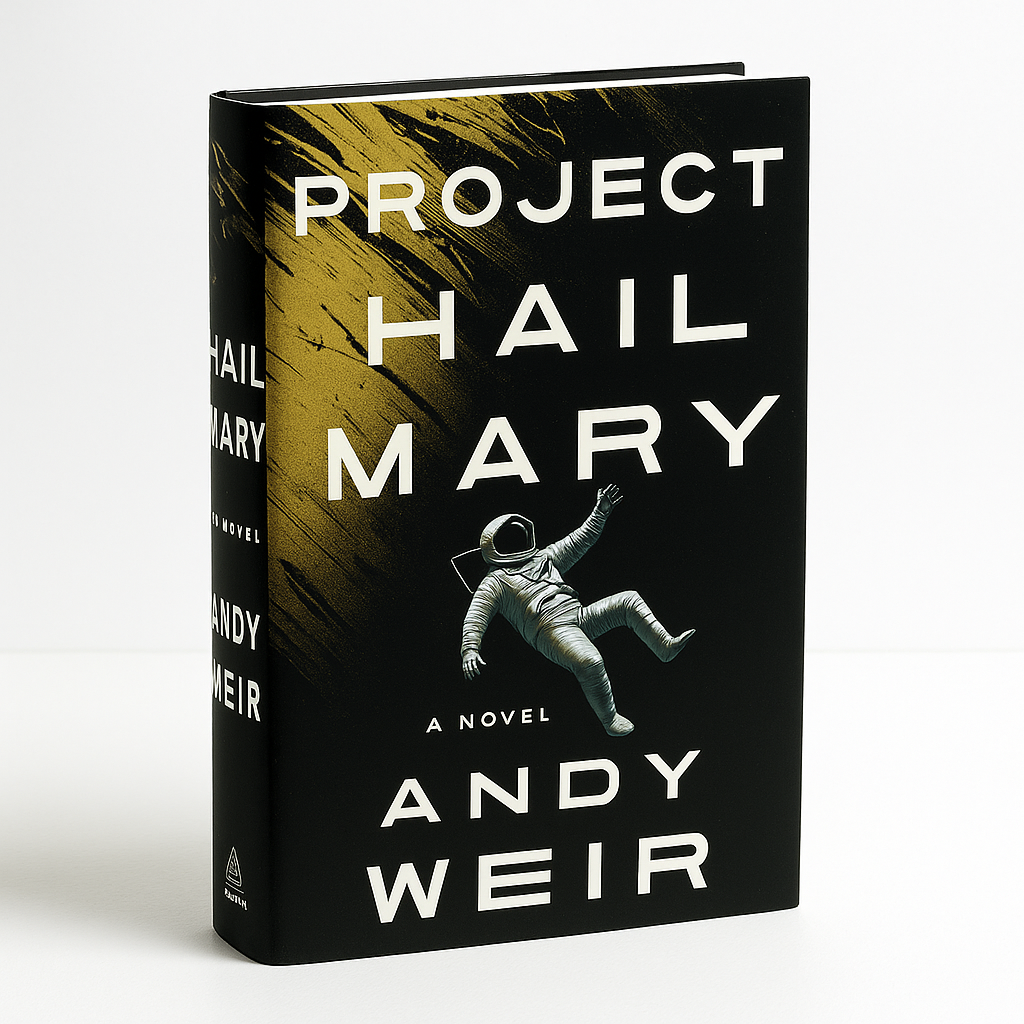
Andy Weir’s Project Hail Mary: A Novel is a standalone hard science fiction story that places one scientist alone in deep space with the fate of Earth on his shoulders. Following the success of The Martian, expectations for Weir’s next big project were high, and this novel largely delivers: it’s dense with real (or plausible) science, structured like a series of escalating engineering puzzles, yet anchored by a surprisingly warm and memorable relationship at its core.
If you’re buying the Kindle edition on Amazon (ASIN: B08FHBV4ZX), expect a substantial, immersive read at around 480–500 pages, with a price that typically hovers in an accessible range like $0.00 depending on current promotions.
Product overview and key features
Premise and setting
The novel opens with protagonist Ryland Grace waking up alone on a spaceship, with no memory of who he is or why he’s there. As he gradually pieces together his identity and mission, we learn that:
- The Sun is being dimmed by a mysterious microscopic lifeform dubbed astrophage.
- Earth has launched a last‑ditch mission—Project Hail Mary—to discover how another star system is surviving the same threat.
- Grace, a reluctant hero with a background in science and teaching, is the only surviving crewmember left to complete the mission.
The narrative alternates between present‑tense survival in space and flashbacks on Earth as Grace’s memory returns, slowly revealing how the mission was conceived, funded, and crewed.
Tone and style
Weir leans heavily into his signature combination of:
- Detailed, step‑by‑step problem solving (chemistry, orbital mechanics, biology, materials science).
- Conversational, often self‑deprecating narration, with Grace constantly thinking out loud and making bad jokes to cope with the stress.
- High stakes presented through realistic constraints: mass limits, power budgets, reaction times, and the unforgiving nature of space.
Despite the heavy science, the tone remains approachable. Grace’s internal monologue acts as a translator, walking readers through complex ideas with simple analogies and worked examples.
Major themes
Key themes that define Project Hail Mary include:
- Cooperation across species and cultures: the book’s standout element is an inventive first‑contact storyline that hinges on communication, trust, and shared problem‑solving rather than conflict.
- Ethics of sacrifice: governments and individuals make morally fraught decisions under extreme time pressure; the book examines what we’re willing to trade to preserve civilization.
- The joy (and cost) of curiosity: Grace’s scientific curiosity drives much of the plot—but it also places him in situations where he faces permanent separation from everything he knows.
Performance and user experience
Pacing and structure
The novel is structured as a mystery plus survival thriller. Weir alternates between:
- Immediate crises on the ship—failing systems, limited supplies, baffling data, and navigation challenges.
- Memory flashbacks—boardroom decisions, global politics, recruitment of specialists, and mission design.
This back‑and‑forth keeps the information flow engaging. Just as a scientific question arises in the present, a flashback often reveals how the ground team anticipated or debated it. For most readers, this dual timeline provides satisfying context without stalling the forward momentum.
Some readers, however, may find the initial chapters slightly slow as they acclimate to the dense scientific explanations and piecemeal memory recovery. Once the central alien character is introduced, the pace accelerates sharply and the book becomes harder to put down.
Science and accessibility
As a piece of hard science fiction, Project Hail Mary is unapologetically technical. Weir spends considerable time on:
- Orbital mechanics and trajectory planning
- Energy budgets and fuel efficiencies
- Microbiology and speculative xenobiology
- Material properties, pressure differentials, and structural integrity
For readers who loved the hands‑on problem solving of The Martian, this will feel like a natural and welcome extension. The science is generally well‑motivated: each explanation serves a plot function, such as justifying a risky maneuver or suggesting a clever workaround to engineering limits.
For readers less interested in technical detail, the sheer volume of calculations and unit conversions may occasionally feel like homework. That said, the important emotional beats and plot twists remain clear even if you skim some of the math.
Characterization and emotional impact
Ryland Grace is written as an everyman scientist: smart, funny under pressure, and capable of creative leaps. He is more overtly humorous and casual than many traditional sci‑fi heroes, which makes him easy to root for. However, he can come across as slightly one‑note to readers who prefer more introspective protagonists.
The breakout element of the book is Grace’s relationship with the alien counterpart he meets on his mission. Their evolving partnership—built from zero shared language or biology—is where the novel truly shines. Weir invests a lot of narrative time into their communication system, cultural exchange, and mutual reliance. Many readers cite this relationship as the main reason the book stays with them long after they’ve finished.
On the emotional side, the novel manages to balance loneliness, existential stakes, and genuine warmth. The final act in particular delivers a resolution that feels both earned and consistent with the themes of sacrifice and cooperation.
Format considerations (ebook and audiobook)
On Amazon, Project Hail Mary is available as a Kindle ebook, which is the edition tied to the ASIN in the provided product link. In this format:
- The clear chapter breaks and section headings make it easy to jump between the present‑day ship sections and Earth‑side flashbacks.
- Inline scientific notation and equations are generally legible and format well on modern e‑readers.
- Highlighting and note‑taking features are genuinely useful if you like capturing interesting scientific tidbits or favorite exchanges between characters.
Many readers also specifically praise the audiobook version (sold separately), which uses voice acting and sound design to distinguish characters and languages. If you’re trying to decide between formats and enjoy audio performances, it can be a particularly strong way to experience the story.
From a value perspective, the Kindle edition on Amazon frequently participates in promos and deals (e.g., periodic discounts from the list price), so watching for a drop to around $0.00 or similar can make it an excellent cost‑to‑page‑count value.
Pros and cons
Pros
- Engaging hard science: Problems feel grounded in real physics and biology, and solutions are logically derived from constraints rather than hand‑waving.
- Memorable alien character and first contact arc: The interspecies friendship is fresh, charming, and emotionally resonant.
- High tension, clear stakes: The survival framework and ticking‑clock solar crisis keep the narrative focused and urgent.
- Accessible voice: Grace’s informal narration and humor lower the barrier to complex concepts.
- Standalone story: No prior reading of The Martian or Artemis is needed; the book wraps up its central plot cleanly.
Cons
- Heavy technical density: Readers not inclined toward science explanations may find some sections slow or overwhelming.
- Protagonist’s voice may not work for everyone: The constant joking, even in high‑stress moments, can feel glib or repetitive depending on taste.
- Limited interiority beyond problem solving: The book focuses far more on external challenges and clever solutions than on deep psychological exploration.
- Some convenient plot elements: A few late‑stage developments rely on optimistic assumptions about technology, durability, or biological stability that may stretch credulity even for science‑fiction fans.
Conclusion and recommendation
Project Hail Mary: A Novel is a strong, modern hard‑sci‑fi adventure that successfully combines rigorous problem‑solving with an unexpectedly heartfelt cross‑species friendship. It is at its best when it leans into cooperative ingenuity: two very different beings, in radically different environments, solving shared existential problems through communication and creativity.
You’ll likely appreciate this book if you:
- Enjoy detailed, realistic science in your fiction
- Liked The Martian and want something similar but more ambitious in scope
- Appreciate character‑driven stories built around loyalty, sacrifice, and collaboration
- Don’t mind (or actively enjoy) a lot of calculations, acronyms, and engineering talk
If you prefer minimalist science fiction that focuses on atmosphere and introspection rather than explicit technical explanations, you may find sections of Project Hail Mary too dense or procedural. But for most readers looking for a smart, accessible, and emotionally satisfying space survival story, the Kindle edition on Amazon—often available around $0.00 during promotions—earns a confident recommendation.