
Supmedic Medical Soft Max™ Nitrile Exam Gloves Review: Everyday Protection for Medical and Food-Handling Tasks
Introduction
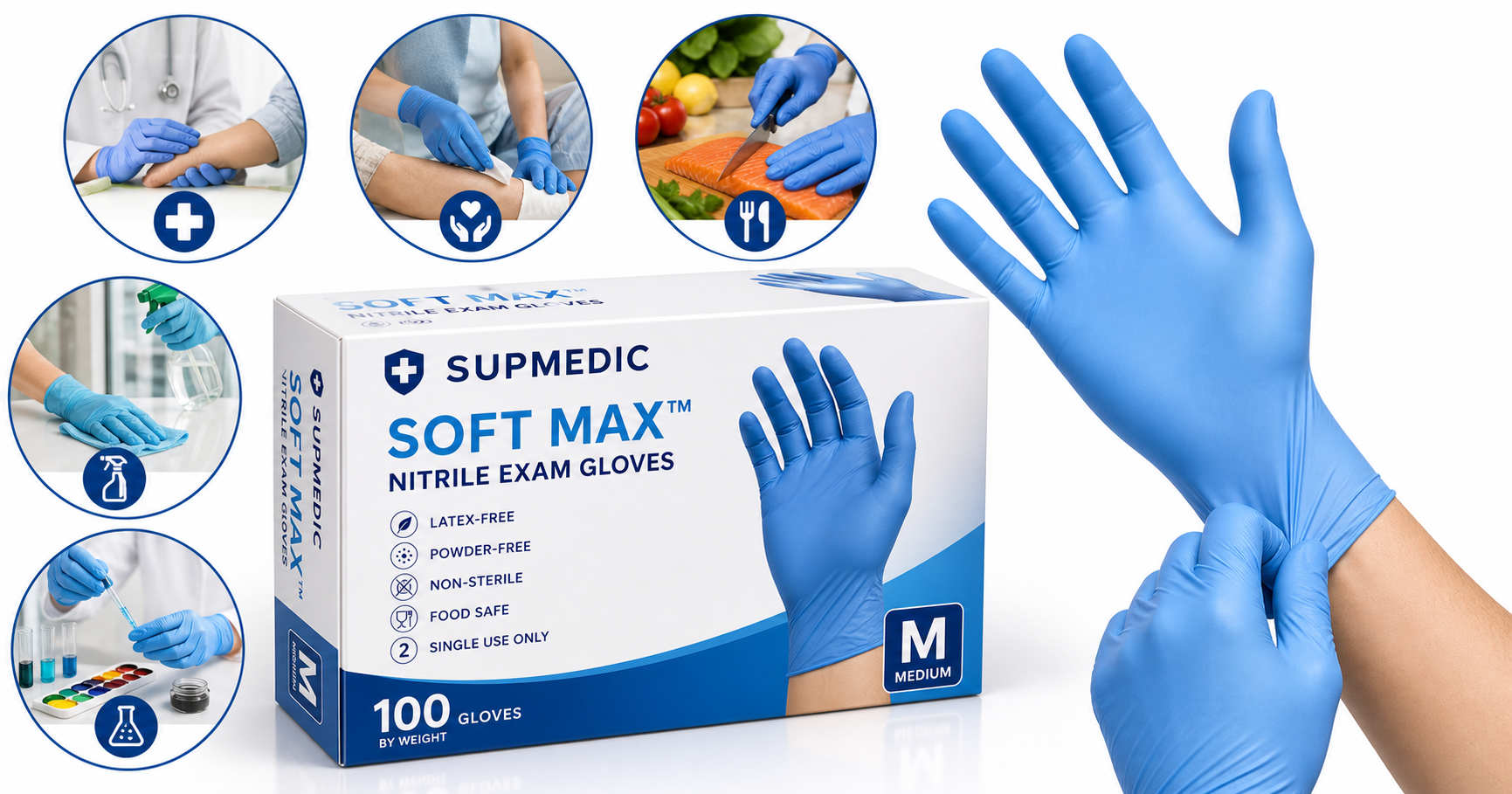
The Supmedic Medical Soft Max™ Nitrile Exam Gloves, 100 Count, Latex-Free, Powder-Free, Non-Sterile, Food Safe, Blue are positioned as versatile, exam-grade disposable gloves aimed at healthcare workers, home caregivers, food handlers, and anyone needing a reliable barrier for everyday tasks.
They are:
- Nitrile-based for better chemical and puncture resistance than vinyl and a good alternative to latex for users with allergies.
- Exam-grade with a medical-style fit suitable for basic medical and hygiene tasks.
- Powder-free to reduce mess and minimize the likelihood of irritation.
- Non-sterile, intended for general examinations and routine procedures rather than surgery.
- Food safe, so they can crossover between clinical, home, and commercial kitchen use.
For buyers comparing multiple disposable glove options, these gloves typically sit in an accessible price band around $8.98 for a box of 100, making them a mid-range, everyday-use choice rather than a premium heavy-duty or ultra-budget option.
Typical Use Cases
1. Medical and Clinical Settings
- Routine patient examinations (non-surgical).
- Basic wound care and first aid where sterile gloves are not required.
- Handling bodily fluids during standard procedures.
- Use in clinics, dental offices, urgent care, and telehealth/home-visit kits.
2. Home Caregiving and Personal Use
- Assisting with hygiene tasks for family members or patients at home.
- Diaper changes, incontinence care, and cleaning bodily spills.
- Handling over-the-counter topical medications and ointments.
3. Food Preparation and Kitchen Work
- Food prep in home kitchens and small food businesses.
- Handling raw meat, seafood, and eggs.
- Tasks requiring frequent glove changes, such as switching between food types or allergens.
4. Cleaning and Household Chores
- Light to moderate cleaning with common household chemicals.
- Bathroom and surface disinfection.
- Pet care tasks (litter boxes, waste cleanup).
5. Light Lab, Craft, and Workshop Tasks
- Handling non-volatile chemicals or reagents in educational or low-risk lab settings.
- Painting, hair coloring, or cosmetic application where stain protection is needed.
- Light mechanical tasks that benefit from improved grip and oil resistance.
Performance in Each Scenario
Medical and Clinical Performance
The Soft Max™ nitrile formulation is typically around the 3.5 mil class in thickness, which is common for exam gloves. This provides a balance of dexterity and barrier protection appropriate for non-surgical medical use.
- Tactile sensitivity: Thin enough to palpate veins, assess skin texture, and perform detailed manual tasks like bandaging or basic instrument handling.
- Fit and comfort: The nitrile material is designed to be soft and reasonably stretchy, conforming to the hand without feeling overly tight if you choose the correct size.
- Fluid barrier: Adequate for contact with bodily fluids during examinations and routine procedures, as expected from exam-grade nitrile gloves.
For high-risk procedures, extended exposure to harsh chemicals, or where sterile conditions are mandatory, a thicker or sterile glove would still be more appropriate.
Home Caregiving and Personal Use
In home-care and personal-health scenarios, these gloves perform well as a general-purpose barrier:
- Quick donning and removal: Powder-free interiors with a smooth finish still slide on relatively easily, particularly with dry hands.
- Skin friendliness: Latex-free construction reduces the risk of allergic reactions, which is important when used daily by caregivers or patients.
- Odor and residue control: Being powder-free means less residue on skin and surfaces, which is helpful when changing gloves frequently.
For extended wear (several hours), users with very sensitive skin may still want to apply moisturizer between uses, but this is typical of nitrile exam gloves in general.
Food Preparation and Kitchen Use
The gloves are explicitly labeled as food safe, which allows confident use in both home and professional kitchens.
- Hygiene: Provide an effective barrier when handling raw meat and fish, helping reduce cross-contamination risk when combined with proper glove-changing practices.
- Dexterity with small items: Thin enough to handle tasks like deveining shrimp, slicing delicate ingredients, or garnishing dishes without losing fine control.
- Oil and moisture resistance: Nitrile performs better than vinyl in oily or wet environments, so grip tends to remain more secure.
For heavy-duty commercial kitchens with extended high-heat exposure (e.g., near fryers for long periods), thicker or heat-tolerant gloves may still be needed, but for most routine food prep these gloves are more than adequate.
Cleaning and Household Chores
For general household cleaning, the Soft Max™ gloves sit in a practical middle ground:
- Protection from common cleaners: Nitrile resists many mild to moderate cleaning agents better than vinyl or bare skin, suitable for bathroom and kitchen disinfecting.
- Tear resistance: The thickness is reasonable for light scrubbing and handling cleaning tools, but extreme abrasion (e.g., scrubbing rough surfaces for long periods) can still cause wear.
- Disposable convenience: A 100-count box makes it easy to discard and replace gloves after messy tasks, preventing cross-contamination.
More aggressive chemical work (e.g., handling strong solvents or concentrated acids) should still be done with specialized chemical-resistant gloves rather than these general exam-grade disposables.
Light Lab, Craft, and Workshop Tasks
For low-risk lab or craft environments, these gloves offer:
- Fine control: Suitable for pipetting, weighing powders, or handling small tools.
- Chemical compatibility: Nitrile generally outperforms latex with certain oils, greases, and some solvents, but users should always verify compatibility for specific chemicals.
- Stain and dye resistance: Helpful for hair color, paints, and inks where bare hands would quickly stain.
For heavy mechanical work, repetitive tool use, or handling sharp edges, a thicker industrial nitrile or cut-resistant glove remains the better choice.
Strengths Across Scenarios
-
Versatile exam-grade design
Suitable for medical exams, home care, food prep, and cleaning, minimizing the need to stock multiple glove types. -
Latex-free and powder-free
Reduces the risk of allergic reactions and avoids the mess associated with powdered gloves. -
Balanced thickness for dexterity
The approximately 3.5 mil–class construction offers a good compromise between tactile feel and barrier protection, especially for tasks requiring precision. -
Food-safe certification
Can be used confidently where both hygiene and regulatory food-contact safety matter. -
Value-focused 100-count pack
A box of 100 gloves at around $8.98 makes it practical for clinics, small businesses, and households to keep gloves on hand for routine tasks without committing to large bulk cases. -
Clear size and color options
The standard medical-style blue color supports quick visual identification and is widely accepted in clinical, food, and cleaning environments.
Limitations Across Scenarios
-
Non-sterile only
These gloves are not suitable for surgical procedures or any environment requiring sterile equipment. Users in such settings will need separate sterile gloves. -
Not ultra-thick or heavy-duty
While appropriate for general exam and household use, they are not designed for intense mechanical work, sustained contact with harsh chemicals, or repeated abrasion. -
Disposable, single-use design
Like all single-use gloves, they are not intended for extended reuse. Repeated donning and removal can stretch or weaken the material. -
Sizing still matters
An incorrect size can lead to tearing (if too small) or reduced dexterity and slippage (if too large). Users may need to experiment with sizes to find the best fit. -
Environmental impact
Being disposable nitrile, they contribute to waste. Facilities seeking more sustainable solutions may look into recycling programs or other waste-reduction strategies.
Verdict
The Supmedic Medical Soft Max™ Nitrile Exam Gloves, 100 Count, Latex-Free, Powder-Free, Non-Sterile, Food Safe, Blue present a solid, all-around choice for users who need exam-grade protection without the cost or specialization of premium heavy-duty gloves.
They excel in:
- Routine medical and clinical examinations.
- Home caregiving and personal hygiene support.
- Food preparation and general kitchen hygiene.
- Everyday cleaning and light workshop or craft work.
Their main trade-offs are typical of this glove category: they are non-sterile, not optimized for extreme mechanical or chemical exposure, and are disposable, with the associated environmental considerations. For the vast majority of everyday professional and household scenarios, however, they offer a reliable balance of comfort, dexterity, and protection.
For buyers needing a versatile, exam-grade, food-safe glove at an accessible cost point around $8.98, this Supmedic Soft Max™ option is a practical and dependable candidate to consider.