
The Correspondent: A Novel – A Quietly Powerful Epistolary Debut
Overview
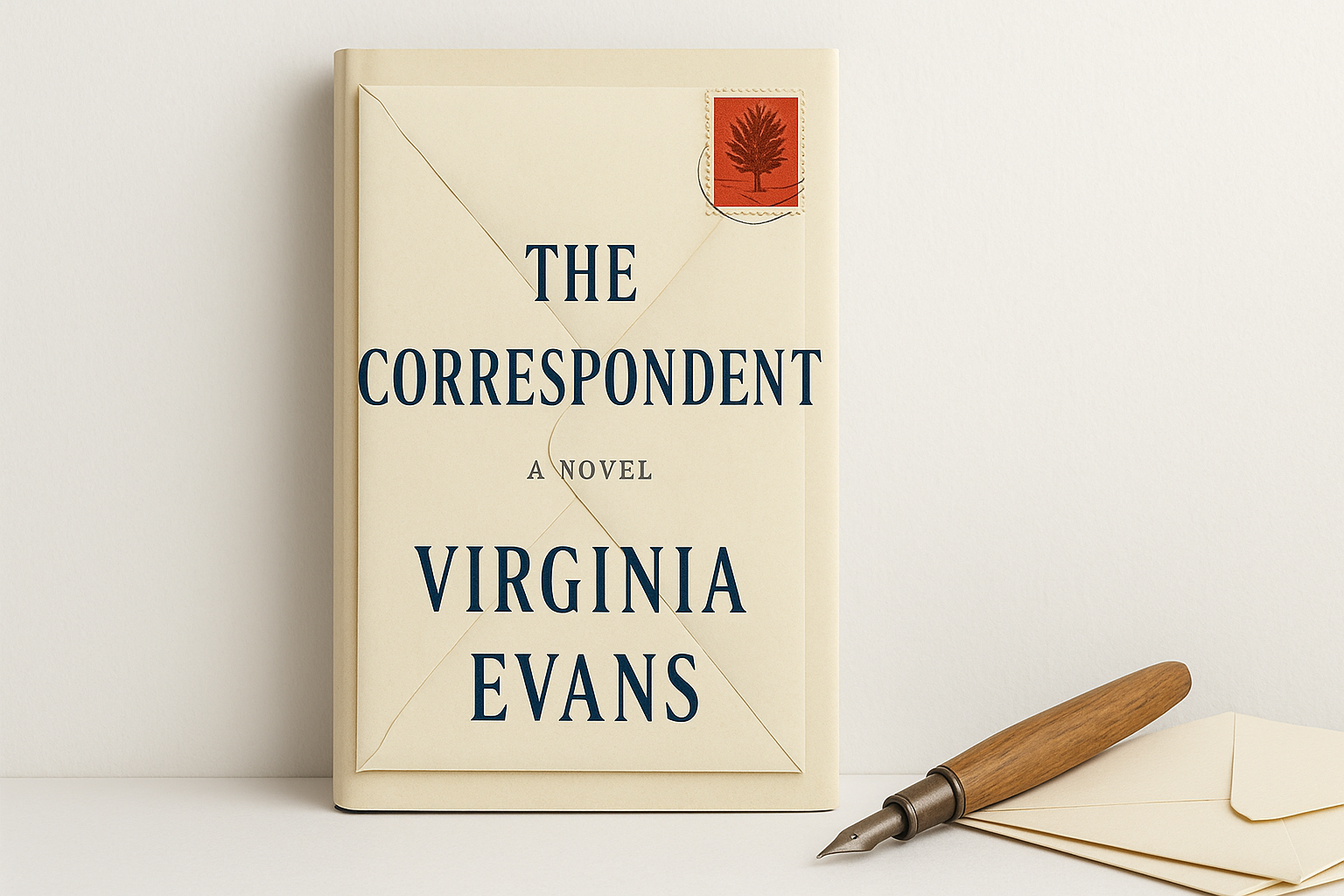
Virginia Evans’s The Correspondent: A Novel is a reflective work of literary fiction told entirely through letters written by its seventy‑three‑year‑old protagonist, Sybil Van Antwerp. A retired, once‑distinguished lawyer, Sybil has long used letter‑writing as the primary way she processes her inner life and the changing world around her.
Set primarily in Maryland and published by Crown, the novel is structured as an intimate epistolary record: morning letters to her brother and best friend, sharply worded notes to a university president who refuses her request to audit a class, and even thoughtful missives to authors like Joan Didion and Larry McMurtry. When unexpected letters from Sybil’s past arrive, they force her to confront an old, unhealed wound and to reckon with whether she can finally extend forgiveness—both to others and to herself.
The book has been longlisted for major prizes such as the Center for Fiction First Novel Prize, the Andrew Carnegie Medal, and the Women’s Prize for Fiction, and has appeared on multiple “Best Books of the Year” lists from outlets like NPR and The Washington Post. It has also found a broad readership as a word‑of‑mouth favorite among fans of quiet, character‑driven stories.
Key Highlights
- Epistolary format: The narrative unfolds entirely through letters, offering a close, conversational view into Sybil’s mind and relationships.
- Older woman at the center: A seventy‑three‑year‑old protagonist, rare in contemporary fiction, brings a lifetime of perspective to themes of love, friendship, and regret.
- Focus on forgiveness and self‑understanding: The plot is anchored in Sybil’s need to confront a painful chapter from her past and to decide what kind of legacy she wants to leave.
- Celebration of the written word: The novel doubles as an homage to letters, books, and the slow, deliberate act of writing as a way of thinking.
- Prize recognition and critical acclaim: Longlisted for several major awards and frequently recommended as a standout debut.
- Accessible yet literary style: The prose balances emotional immediacy with a contemplative, measured tone.
For readers considering a purchase, the hardcover edition is typically listed around $19.58 on Amazon, reflecting its positioning as a new literary release in the hardcover market.
Core Features
Epistolary Structure
The most defining feature of The Correspondent is its commitment to the letter form. Nearly every page is a piece of correspondence from Sybil, whether to someone in her immediate circle or to figures she admires or wishes to challenge. This structure offers several advantages:
- Intimacy: Letters allow Sybil to speak directly to specific people, revealing different facets of her personality depending on her audience.
- Fragmented storytelling: The reader pieces together Sybil’s history, relationships, and regrets through partial accounts and allusions, mirroring how we understand real lives through scattered documents and memories.
- Varied tone and register: Some letters are formal and argumentative, others are casually affectionate, and a few are painfully vulnerable.
Readers who enjoy assembling a story from non‑linear or partial narratives will likely find this structure especially compelling. Those who prefer a conventional third‑person or first‑person narrative, however, may find the format takes some adjustment.
Character‑Driven Plot
While there are clear plot developments—particularly surrounding the reemergence of someone from Sybil’s past—the novel’s emphasis is firmly on character and interiority. We see Sybil as:
- A mother and grandmother, navigating generational differences and lingering tensions.
- A former lawyer, deeply shaped by her professional identity and the discipline of argumentation.
- A friend and sibling, whose letters reveal longstanding loyalties, minor resentments, and shared histories.
- An avid reader and thinker, in dialogue with books and ideas as much as with people.
The narrative tension arises less from external events and more from whether Sybil can integrate her past into a story about herself that she can live with.
Themes of Aging, Regret, and Forgiveness
Sybil is very much "in the winter of her life," and the book leans into the particular emotional terrain of older adulthood:
- Reckoning with past choices: Sybil revisits decisions she made decades earlier and considers their long‑term consequences for herself and others.
- Shifts in identity: Retirement, physical aging, and changing family dynamics force her to ask who she is apart from her professional achievements and parental role.
- Possibility of late‑life change: The novel suggests that meaningful emotional growth and reconciliation are possible even in one’s seventies.
Forgiveness is the central question: Can Sybil forgive someone who deeply hurt her? Can she forgive herself for her own failures? The answer unfolds gradually and without neat, sentimental closure.
Love of Books and Letters
A notable pleasure of the novel lies in its meta‑literary dimension. Sybil writes to authors, argues with their ideas, and reflects on the solace she finds in reading. Some of the most memorable passages are essentially miniature essays on why letters—and by extension, literature—matter. For readers who already cherish physical letters, marginalia, and long‑form reading, this aspect will likely resonate strongly.
Usage Experience
Although “usage” for a book is largely about the reading experience, a few practical aspects are worth noting for potential buyers of the Amazon edition:
- Format and Length: The primary Amazon listing is for the hardcover edition, with approximately 285–304 pages depending on the source. It’s substantial enough to feel immersive, but not so long as to be daunting.
- Pacing: The pace is deliberate rather than fast. Because each letter is discrete, it’s well‑suited to reading in short sessions—one or two letters at a time—without losing track of the overall story.
- Accessibility: The prose is clear and readable, even as it engages with serious emotional themes. Readers not typically drawn to “high literary” styles are unlikely to find it opaque.
- Emotional Arc: Many readers report a gradual building of emotional impact. What begins as a seemingly cozy portrait of an elderly letter‑writer becomes deeper and more affecting as past traumas and unresolved relationships surface.
In terms of physical handling, the hardcover’s moderate page count and standard trim size make it comfortable to hold for extended reading, and it lends itself well to annotation for readers who like to mark passages.
Strengths
-
Rich, Nuanced Protagonist
Sybil is a complex, fully realized character. Her wit, stubbornness, vulnerability, and moments of self‑deception combine to create a figure who feels convincingly lived‑in rather than idealized. -
Effective Use of the Epistolary Form
Many novels experiment with letters or emails, but The Correspondent commits to the form at the structural level. The result is a narrative that feels cohesive yet layered, using gaps and omissions as meaningfully as what’s on the page. -
Thoughtful Treatment of Aging
The book takes seriously the inner life of a woman in her seventies, avoiding both condescension and undue sentimentality. It acknowledges grief, loneliness, and physical limitations without reducing Sybil to them. -
Emotional Payoff Without Manipulation
When the central conflict tied to Sybil’s past comes into focus, the resolution feels earned rather than contrived. The novel resists tidy, cinematic closure in favor of something quieter but more believable. -
Literary Yet Approachable Style
The language is polished and often elegant, but it prioritizes clarity and emotional truth over stylistic showiness. Readers looking for a balance between literary merit and readability will likely be satisfied. -
Award Recognition and Critical Buzz
Its longlisting for prominent prizes and appearance on best‑of lists provide additional assurance for readers who use such markers to decide what to pick up next.
Weaknesses
-
Slow, Reflective Pacing
Readers who favor plot‑driven fiction with high external stakes may find the pacing too slow or the conflicts too interior. The book asks for patience. -
Limited Range of Voices
Because the story is almost entirely filtered through Sybil’s letters, other characters’ perspectives are necessarily constrained. Some readers may wish for more direct access to those secondary voices. -
Reliance on Implied Backstory
The novel often hints at past events rather than depicting them directly. While this can be rewarding for readers who enjoy inference and subtext, others may feel key moments are under‑dramatized. -
Epistolary Constraints
The letter format, though well executed, means there are occasional stretches where exposition and reflection outweigh scene‑based storytelling. A few readers may experience these sections as static. -
Emotional Tone May Feel Heavy
Themes of grief, regret, and aging are central. While there is warmth, humor, and tenderness, the overall tone may feel somber for those seeking purely escapist reading.
Suitable Scenarios
The Correspondent: A Novel is especially well‑suited for:
- Readers who love epistolary fiction: Fans of novels told through letters, diaries, or other documents will appreciate the structural commitment here.
- Book clubs: The themes of forgiveness, aging, and how we narrate our own lives offer rich material for group discussion, and the moderate length makes it manageable for most readers.
- Fans of character‑driven literary fiction: Those drawn to interiority, voice, and emotional nuance rather than high‑concept plots will likely connect strongly.
- Readers interested in stories about older protagonists: If you’re looking for nuanced portrayals of later life—especially from the perspective of a woman whose identity has been shaped by career, family, and intellectual life—this is a strong candidate.
- Gift giving: For avid readers who appreciate reflective, emotionally resonant novels, the hardcover edition at around $19.58 makes a thoughtful gift, particularly for birthdays, retirements, or holidays.
Final Evaluation
The Correspondent: A Novel stands out as a quietly powerful debut that trusts the reader’s patience and emotional intelligence. Its epistolary form is not a gimmick but a carefully chosen vehicle for exploring how one woman has written her way through love, loss, ambition, and regret.
While its measured pacing and focus on interior conflict may not suit every taste, readers who value psychological depth, lived‑in characters, and fiction that pays homage to the act of writing itself will likely find it deeply rewarding. The novel’s critical recognition and word‑of‑mouth popularity further underscore its appeal.
If you’re drawn to reflective literary fiction and intrigued by the idea of spending time inside the mind of a seventy‑three‑year‑old letter‑writer reckoning with her past, The Correspondent: A Novel is a strong recommendation—and the Amazon hardcover edition at $19.58 is a fitting way to experience it in a tangible, enduring form.