
The Door Balancer Review: A Simple Fix for Self-Closing “Ghost” Doors
Introduction
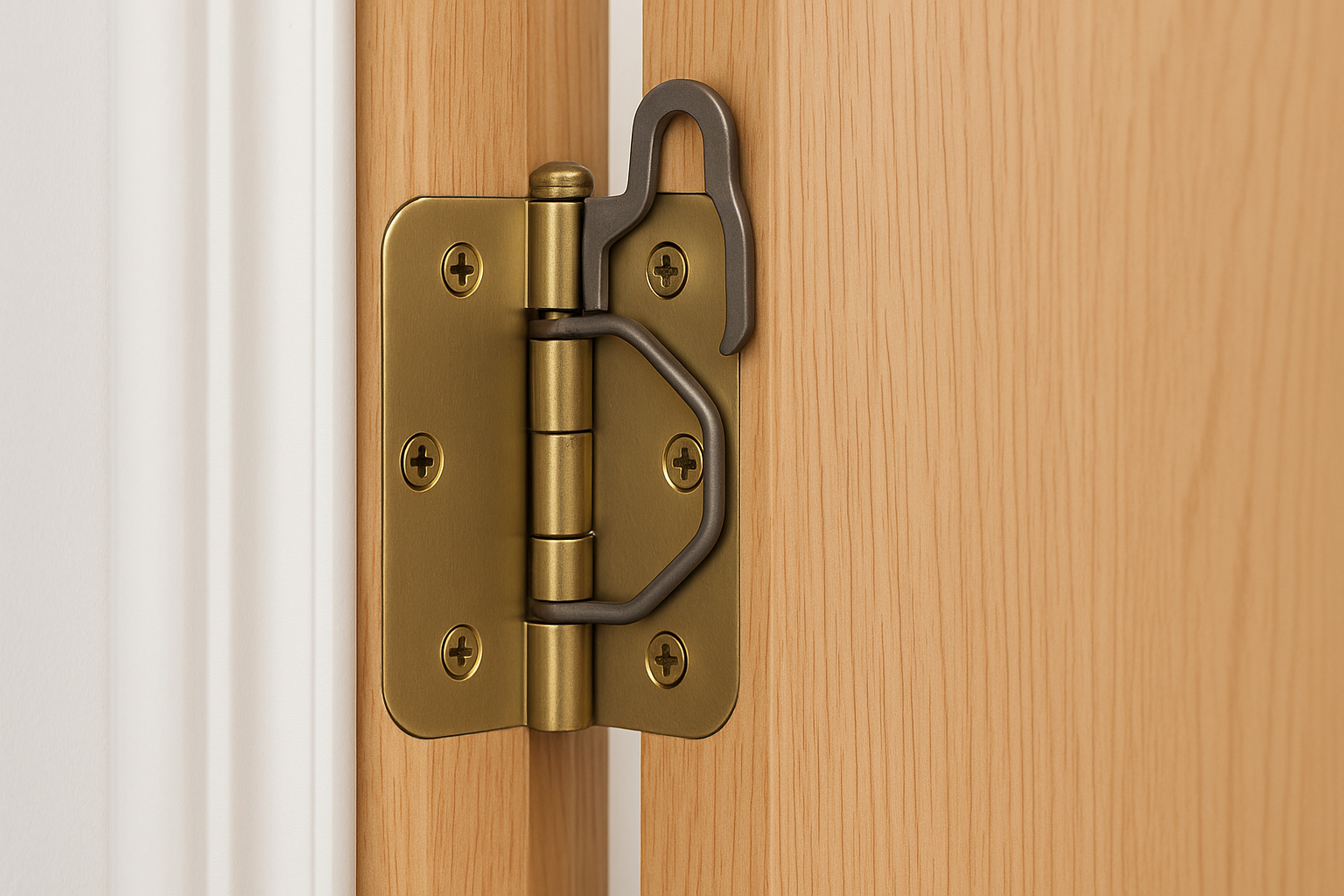
Interior doors that slowly swing shut on their own—often called "ghost doors"—are a common frustration in older or slightly out-of-plumb homes. Traditional fixes usually involve floor wedges, bulky door stops, or improvised props that create tripping hazards and clutter. The Door Balancer, sold on Amazon as "The Door Balancer Eliminates The Need for Door Props, Door Stops and Door Wedges", offers a different approach: a small torsion spring that fits on the door hinge to control the door’s closing behavior.
This review looks at how The Door Balancer works, how easy it is to install, what it’s like to use day to day, and which types of doors and households will benefit most. We’ll also consider where it falls short, so you can decide if it’s a better solution than a conventional door stop.
Using the price point of around $7.99 as a reference, The Door Balancer positions itself as a low-cost, DIY-friendly way to fix self-closing doors without modifying the frame or floor.
Product overview and key features
The Door Balancer is essentially a patented torsion spring designed to sit on a standard residential door hinge pin. Once installed, it applies a gentle counterforce to keep the door from drifting closed on its own.
Design and construction
- Torsion spring form factor – The product is a shaped metal spring that fits between the door and the jamb, with the hinge pin passing through to hold it in place.
- Hinge-mounted – It installs on existing interior door hinges; no floor contact, no wall bumpers, and no visible wedges.
- Compact footprint – The spring tucks into the hinge area, remaining mostly out of sight when the door is closed.
- Steel construction – The spring is made from metal (torsion steel), designed to flex repeatedly without losing shape under normal interior-door loads.
Functional features
- Stops “ghost” doors – Adds counter-torque so slightly out-of-plumb doors no longer swing shut on their own.
- Alternative to props and wedges – Intentionally replaces floor door stops, wall bumpers, and wedges, which can be easy to misplace or trip over.
- Quick installation – Designed to be installed in a matter of minutes with minimal tools, typically just a hammer and small nail set or punch to lift the hinge pin.
- Scalable solution – Severely out-of-plumb or heavier doors can use more than one spring (on multiple hinges) for greater holding force.
Intended use cases
The Door Balancer is best suited for:
- Interior swing doors with standard residential hinges and removable hinge pins
- Bedrooms, bathrooms, closets, and home offices where doors tend to drift shut
- Situations where you want the door to stay open most of the time, without using a floor wedge or decorative stop
It is not a lock or security device and is not intended for heavy exterior doors, fire-rated doors, or commercial applications.
Performance and user experience
Installation process
For most standard residential doors, installation is straightforward:
- Choose the hinge – Typically the top or middle hinge is used, depending on how the door behaves.
- Remove the hinge pin – Tap the hinge pin upward using a nail set or similar tool and pull it out.
- Position the spring – Place The Door Balancer on the hinge barrel, aligned according to the instructions so its arms will apply torque when the pin is reinserted.
- Reinsert the hinge pin – Slide the pin back through the hinge and the spring, then tap it fully into place.
- Test and adjust – Open and close the door to gauge the effect. If the door still swings closed, you may need to reposition the spring or, for very out-of-plumb doors, add a second spring on another hinge.
Most users with basic DIY comfort should be able to complete this in a few minutes per door. The main requirement is that the hinges use removable hinge pins; fixed-pin or specialty hinges may not be compatible.
Day-to-day use
Once installed and adjusted, The Door Balancer is largely hands-off:
- Keeps doors from drifting – Doors that previously swung shut on their own tend to remain at the angle where you leave them, which is especially helpful in hallways, bathrooms, and bedrooms.
- No floor clutter – Because it lives in the hinge, there is nothing on the floor to trip over or to kick out of place.
- Pet- and kid-friendly – By preventing doors from accidentally closing, it can reduce instances of pets being locked in rooms or children having doors drift shut behind them.
- Quiet operation – There’s no loud impact as with some rigid door stops; the spring simply resists motion.
Effectiveness and limitations
In practice, performance depends on how badly out of plumb the door is and how heavy it is:
- For mild to moderate ghost doors, a single Door Balancer usually provides enough counterforce to stop the slow swing.
- For heavier or severely tilted doors, you may need more than one spring or may still experience some tendency to move if pushed by strong drafts.
It’s also worth noting:
- You will feel a slight resistance when manually closing or opening the door, as you’re working against the spring. Most users adapt quickly to this.
- On certain hinge and trim configurations with very tight clearances, fitting the spring may be challenging, and minor interference or rubbing is possible if the geometry is unusual.
Overall, when used on compatible doors and installed correctly, The Door Balancer delivers a simple, effective improvement for everyday door behavior.
Pros and cons
Pros
- Eliminates floor wedges and props – No more rubber wedges, door bricks, or improvised stops cluttering the floor.
- Neat, hinge-based solution – Installs on the hinge, staying mostly out of sight and preserving clean floor and wall surfaces.
- Quick DIY installation – Typically a few minutes per door with basic tools.
- Improves convenience and safety – Reduces toe-stubs on wedges and cuts down on doors closing unexpectedly on pets or kids.
- Adjustable approach – Multiple springs can be used on the same door if extra holding force is needed.
- Budget-friendly – At around $7.99, it’s a relatively inexpensive fix compared to rehanging or reframing a problem door.
Cons
- Compatibility limits – Requires standard residential hinges with removable pins; some modern or specialty hinges won’t work.
- Not a structural fix – It compensates for a door that’s out of plumb; it doesn’t correct underlying framing or hinge alignment issues.
- Added hinge torque – As with any hinge-mounted spring or stop, there is additional load on the hinge hardware over time, though typically within acceptable limits for interior doors.
- May need multiple units – Severely misaligned or especially heavy doors may require more than one spring, increasing cost and complexity per door.
- No lock or security enhancement – It won’t prevent forced entry or stop someone determined to close the door; it’s strictly a convenience device.
Conclusion and recommendation
The Door Balancer is a clever, low-profile solution to a common household annoyance: interior doors that refuse to stay open. By leveraging a small torsion spring on the hinge, it removes the need for traditional door props, floor stops, and wedges, keeping floors clear and reducing tripping hazards.
Homeowners dealing with mild to moderately self-closing interior doors will likely see the most benefit. If your priority is simply to stop a bedroom, bathroom, or hallway door from drifting shut—and you’d rather not rely on visible stops on the floor or wall—The Door Balancer is worth serious consideration.
It’s not a cure-all for severely misaligned framing, and it’s not meant for heavy exterior or commercial doors. But for the vast majority of residential ghost doors, it offers a neat, cost-effective alternative that stays out of sight and out of the way. If that matches your situation, The Door Balancer is a practical, inexpensive fix that may quickly pay for itself in everyday convenience.