
The Jesus Discoveries: Archaeology, Evidence, and Encountering the Historical Jesus
Overview
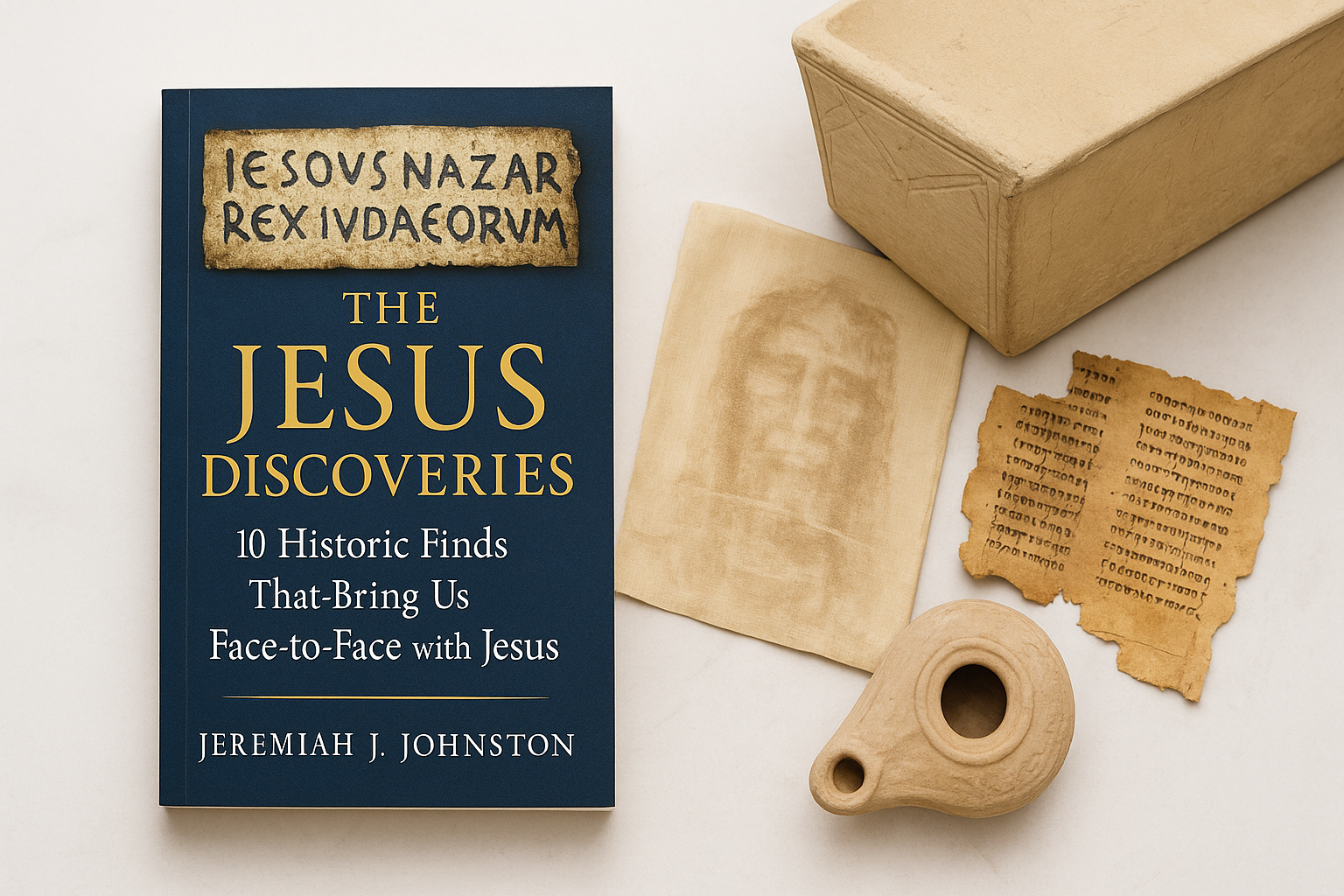
The Jesus Discoveries: 10 Historic Finds That Bring Us Face-to-Face with Jesus is a 176‑page paperback from Bethany House Publishers by New Testament scholar and minister Jeremiah J. Johnston (ISBN: 0764243667). Designed for a general audience, the book surveys ten significant archaeological and historical findings that intersect with the New Testament story and the life of Jesus.
Rather than offering an exhaustive academic treatment, Johnston focuses on accessible explanations of artifacts and documents—such as the Shroud of Turin, the James Ossuary, and the Magdalen Papyrus—and explores how these finds relate to core Christian claims about Jesus’ identity, crucifixion, and resurrection. The book positions itself squarely in the field of Christian apologetics and biblical history, aiming to respond to the modern, skeptical demand for "artifacts or it didn’t happen" by highlighting evidence that supports the reliability of the Gospel accounts.
For readers browsing on Amazon, the paperback typically sits around $13.06, placing it in the mid-range for contemporary Christian non-fiction and apologetics.
Standout Features
1. Ten-Themed Structure Around Key Discoveries
The book is organized around ten "discoveries," each framed as a specific way of coming "face-to-face" with Jesus through history. Examples include:
- The Shroud of Turin – Engaging with one of the most debated artifacts associated with Jesus’ burial and resurrection.
- The Ancient World of Healing Magic – Setting Jesus’ miracles against the backdrop of first-century healing practices and claims.
- The James Ossuary – Exploring the controversial bone box inscribed with a reference to "James, son of Joseph, brother of Jesus."
- Early Skeptics and Apologists – Looking at non-Christian critics and early defenders of the faith as historical witnesses to Jesus.
- The Pontius Pilate Affirmations – Inscriptions and artifacts confirming the historicity of the Roman prefect named in the Gospels.
- “King of the Jews” Inscription & Early Crucifixion Imagery – Considering early written and visual references to Jesus’ death.
- The Magdalen Papyrus & Other Early Manuscripts – Highlighting ancient fragments and documents that push the textual history of the Gospels closer to the events they describe.
This discovery-based structure makes the book easy to dip into, while still building a cumulative case for the historical credibility of the New Testament narrative.
2. Apologetics Framed for a Skeptical Age
Johnston explicitly writes in response to contemporary skepticism about Jesus’ existence and the reliability of the Bible. Throughout the book, he:
- Identifies common objections ("There’s no evidence Jesus ever lived," "The Gospels are too late to be reliable") and addresses them using historical and archaeological data.
- Links each discovery to a core claim about Jesus—His identity, His miracles, His crucifixion, or His resurrection—rather than treating artifacts as mere curiosities.
- Encourages readers to see that Christian faith is not blind belief, but rests on events that occurred in real places, at real times, among real people.
3. Integration of Devotional and Practical Application
Although grounded in historical material, The Jesus Discoveries is not purely academic. Each chapter aims to connect the evidence back to the reader’s spiritual life. The recurring “face-to-face” framing invites reflection on questions such as:
- What does it mean for my faith if Jesus really lived, died, and rose in documented history?
- How should I respond personally to a Messiah whose story can be traced in inscriptions, artifacts, and manuscripts?
This dual focus makes the book suitable for personal devotion, small group discussion, and church-based apologetics classes.
Supporting Features
Beyond its central discoveries, the book includes several supporting strengths that add to its value:
- Clear, Non-Technical Language – Johnston generally avoids heavy jargon, making complex topics like textual criticism and archaeological methodology accessible to readers without formal theological training.
- Historical Contextualization – The author situates artifacts within the broader landscape of first-century Judaism, Roman governance, and the early Christian movement.
- Connections to Other Evidence – While each chapter spotlights one main discovery, Johnston frequently references related finds (e.g., Dead Sea Scrolls, early Christian writings) to show that historical support for the New Testament is cumulative, not isolated.
- Consistent Focus on Jesus – The narrative repeatedly returns to Jesus’ life, claims, death, and reported resurrection, rather than becoming a general survey of biblical archaeology.
Depending on the edition or seller, readers may also encounter supplemental materials such as endorsements from scholars and pastors, which underscore the book’s intended use in both church and academic-adjacent contexts.
Usability
Reading Experience
At 176 pages and organized into clearly labeled parts and chapters, The Jesus Discoveries is designed for straightforward, linear reading but also works well for:
- Chapter-by-chapter study – Each discovery stands on its own, allowing readers to read one chapter at a time.
- Group use – The thematic structure lends itself to a 6–10 week small group or class format, with one discovery per session.
The tone is conversational yet informed, making it approachable for:
- Christians seeking reasons for confidence in their faith.
- Curious skeptics willing to consider historical evidence.
- Students and lay leaders preparing to teach or lead discussions on apologetics.
Accessibility for Different Audiences
- Beginners – Those new to historical Jesus studies will appreciate the clear explanations and focus on big-picture implications rather than technical debates.
- Intermediate readers – Christians who have read introductory apologetics will find new material in the specific archaeological case studies and curated set of discoveries.
- Advanced readers – Scholars and specialists may find the treatment too introductory, but may still appreciate the book as a tool for recommending to congregants, students, or friends.
Performance
Depth vs. Brevity
Given its modest length, the book opts for breadth and clarity over deep technical engagement. For each discovery, Johnston typically:
- Introduces what the artifact or text is.
- Describes how and where it was discovered, with essential historical context.
- Explains the main scholarly debates or points of contention in an accessible way.
- Draws out implications for understanding Jesus and the New Testament.
Readers looking for extensive footnotes, primary language analysis, or full surveys of competing hypotheses will likely need to supplement this volume with more academic resources. However, as an entry point or faith-building overview, its level of detail is generally appropriate.
Balance Between Evidence and Interpretation
The book aims to encourage confidence in the Gospels, so its interpretive stance is openly Christian and apologetic. That means:
- It tends to emphasize how each discovery supports the New Testament rather than dwelling at length on skeptical interpretations.
- It highlights mainstream or supportive scholarly voices more than radical critical positions.
For readers who share this starting point, that orientation will feel coherent and reassuring. More skeptical or academically oriented readers may wish for more extensive engagement with alternative viewpoints, but can still benefit from the concise summaries of what the key artifacts are and why they matter.
Practical Impact
In terms of "performance" in real-world use, The Jesus Discoveries is well-suited for:
- Personal faith building – Reinforcing that belief in Jesus is anchored in historical reality.
- Equipping conversations – Providing talking points and examples for discussions with questioning friends or family members.
- Teaching tools – Serving as a core or supplemental text in church classes on apologetics, biblical history, or the historical Jesus.
Pros and Cons
Pros
- Clear, thematic structure around ten discoveries makes the material easy to navigate and remember.
- Accessible writing style opens archaeological and historical topics to non-specialists.
- Strong devotional and pastoral tone connects historical evidence to personal faith and spiritual growth.
- Focused on Jesus Himself, not just general biblical background, which keeps the book tightly aligned with its title and purpose.
- Suitable for group study, with chapters that naturally invite discussion and reflection.
Cons
- Introductory depth may feel insufficient for readers already familiar with historical Jesus scholarship or advanced apologetics.
- Apologetic emphasis means skeptical or non-Christian readers may desire more sustained engagement with critical perspectives and counter-arguments.
- Selective coverage of discoveries is inevitable in a 10‑chapter format, so readers interested in broader biblical archaeology will need additional resources.
Summary
The Jesus Discoveries: 10 Historic Finds That Bring Us Face-to-Face with Jesus is a focused, readable guide to some of the most discussed artifacts and historical data related to Jesus and the New Testament era. Jeremiah J. Johnston brings together biblical studies, archaeology, and pastoral sensitivity to show how physical evidence—inscriptions, ossuaries, burial cloths, papyri, and more—intersects with the claims Christians make about who Jesus is and what He accomplished.
For Christians seeking historically grounded encouragement, or for church leaders looking for a dependable, user-friendly introduction to evidence for the historical Jesus, this book is a compelling option. Its balance of narrative, explanation, and application makes it an effective bridge between the world of academic research and the everyday questions of faith—at an accessible price point around $13.06 on Amazon, depending on current promotions and availability.